
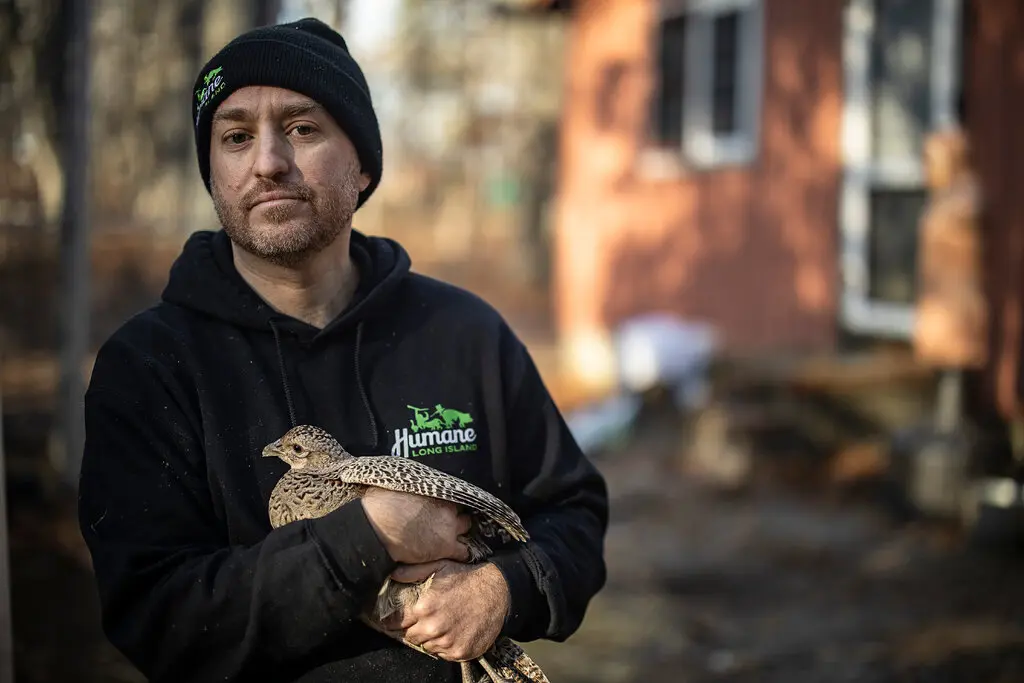
Canned pheasant hunting
Each year, the New York State Department of Environmental Conservation (DEC) breeds 65,000 ring-necked pheasants at a state-funded factory farm, only to abandon them to be shot, starve, or die of disease. Marketed as “conservation,” this cruel and costly program harms animals, wastes public funds, and endangers public health. Humane Long Island is urging New York to end this cruelty and redirect the $1.4 million spent on pheasant stocking to grants for licensed wildlife rehabilitation.
State-Sponsored cruelty: Reynolds Game Farm
65,000 pheasants doomed every year
Each year, the DEC breeds 65,000 ring-necked pheasants at Reynolds Game Farm, a state-sponsored factory farm in Ithaca, New York. Some birds are sold to hunting clubs, others are abandoned on public hunting lands, and still more are sent to schools and agricultural programs—indoctrinating children into the canned trophy hunting industry under the false pretense of “conservation.”
Being raised and fed in captivity before their abrupt release, the birds lack foraging and other survival skills, like a healthy fear of hunters or natural predators. Once released, these defenseless birds are left to be shot, struck by vehicles, or starve in unfamiliar habitats. Even hunters, conservationists, and wildlife officials have described this practice, known as “stocking,” as futile, unsuccessful, and inappropriate.
Raised in confinement and dependent on humans for food and shelter, the birds lack basic survival instincts—including foraging skills and a healthy fear of predators or hunters. According to Pheasants Forever, a pheasant hunting organization, more than 90% of pen-raised pheasants are killed by predators, with nearly half dying within just one week of release. Others are hit by cars, starve, or die of exposure in our harsh winters. It is rare for even one bird to survive until spring, making the DEC’s pheasant program a cruel, wasteful, and ineffective misuse of state resources.
Squandering $1.4 million in State conservation funds
In 2024, the DEC spent $1.4 million of the New York State Conservation Fund on its cruel pheasant stocking program. While hunting, fishing, and trapping licenses are promoted as supporting “conservation,” in reality the fund primarily subsidizes the killing of wildlife for recreation. Section 83 of the State Finance Law even allows these funds to be used to promote shooting, effectively humane-washing the killing of animals under the guise of conservation.
The Conservation Fund Advisory Board (CFAB), which advises the DEC on policies, plans, and programs affecting fish and wildlife—including how Conservation Fund money is spent—requires members to be longtime hunters, fishers, or trappers. Licensed wildlife rehabilitators are excluded, even though organizations like Humane Long Island and other wildlife rehabilitators absorb far greater costs rescuing and treating animals harmed by hunting, fishing, and trapping than hunters contribute through their $22 licenses. When questioned, DEC leadership told Humane Long Island that rehabilitators are not considered stakeholders because they do not “pay into the fund,” ignoring the immense public service and financial burden borne by those who actually care for wildlife harmed by these very same licensees.
Importing suffering into new york’s ecosystems
Ring-necked pheasants are not native to North America—they originated in the open fields of Central and Eastern Asia, including China and Japan. Unlike native species that have evolved to thrive in New York’s environment, these birds struggle to find food, evade predators, and survive the state’s harsh winters.
By releasing tens of thousands of non-native pheasants each year, the DEC condemns these birds to suffering and death while also disrupting local ecosystems. Stocking programs can spread disease, disturb predator-prey balances, and divert resources away from the protection of native wildlife. Even seasoned hunters and wildlife managers have described pheasant stocking as “futile,” “not successful,” and “inappropriate,” recognizing that these Asian birds simply cannot adapt to New York’s forests and wetlands.
True conservation protects native species and habitats—not exploits non-native animals bred only to die.

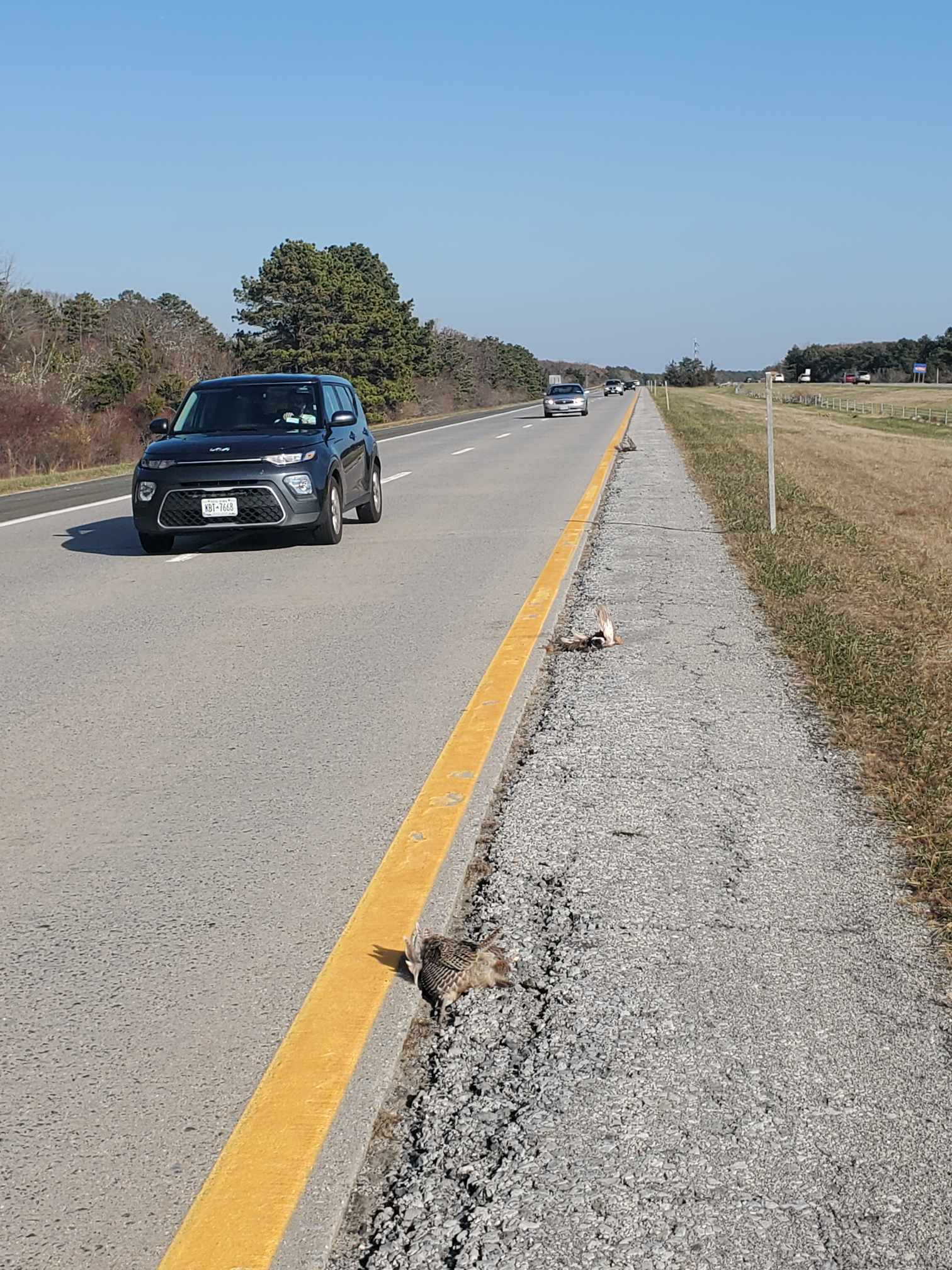
dozens of dead birds Strewn Across Sunrise highway near a DEC release site
This pheasant was one of dozens of dead birds found strewn across Sunrise Highway between an Eastport hunting club and a DEC release site during a single day in 2023. Native to grasslands and open fields of Central and Eastern Asia, pheasants from the DEC’s release program frequently congregate alongside our open highways when abandoned to woodlands or when they are forced from cover and across roads by gunshots.
482245266_956278480002622_3660768552596839492_n
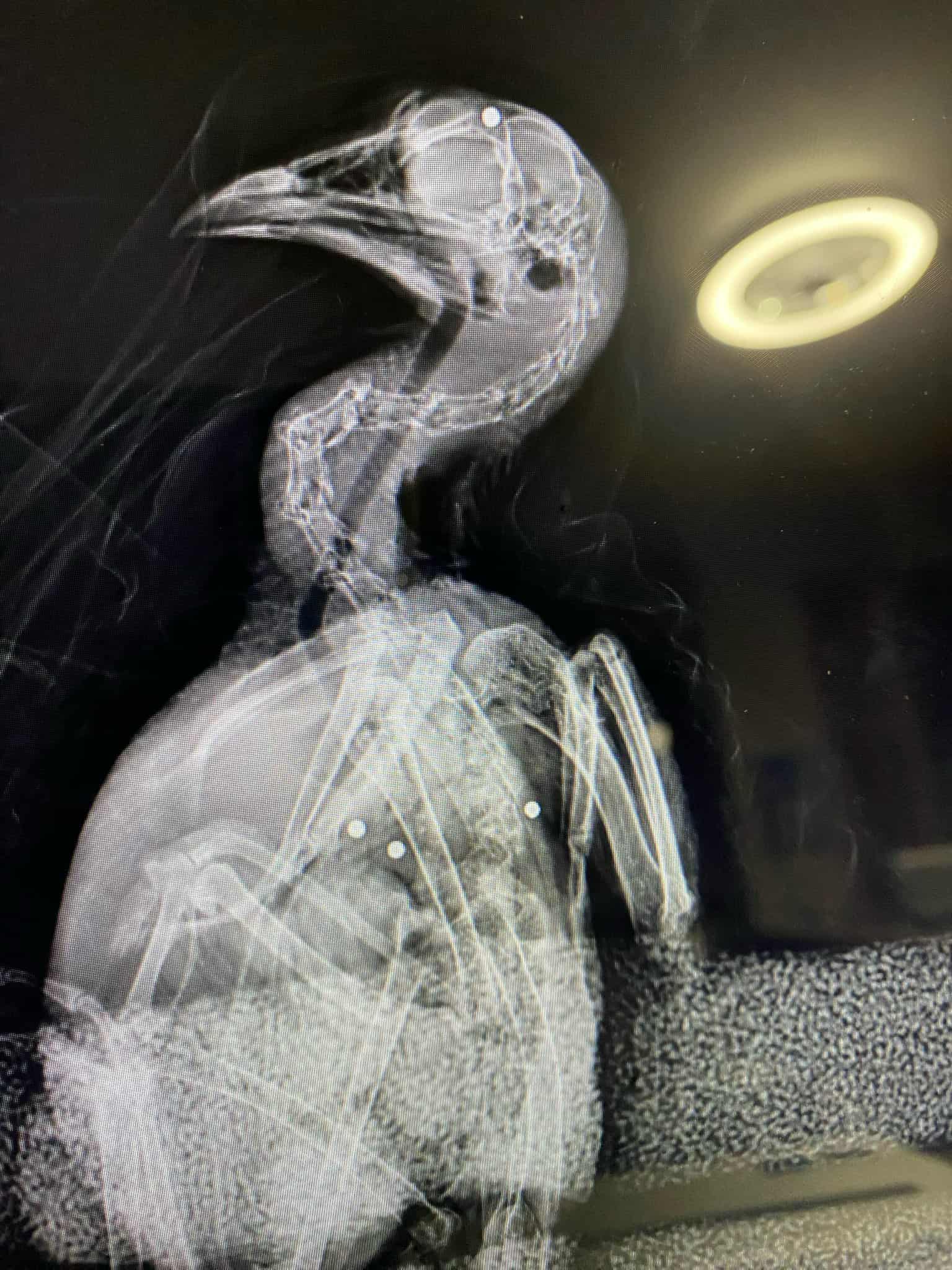
4 in the chest and 1 in the head
This x-ray shows a pheasant named Bow who survived being shot four times in the chest and once in the head after being released by the DEC on Long Island. Humane Long Island rescued Bow after he was found scavenging for food at a bird feeder. Being raised and fed in captivity before his abrupt release, Bow lacks the ability to forage and a healthy fear of hunters or natural predators. Bow is now living at West Place Animal Sanctuary in Rhode Island, showing that the DEC’s misuse of conservation funds has nationwide repercussions.
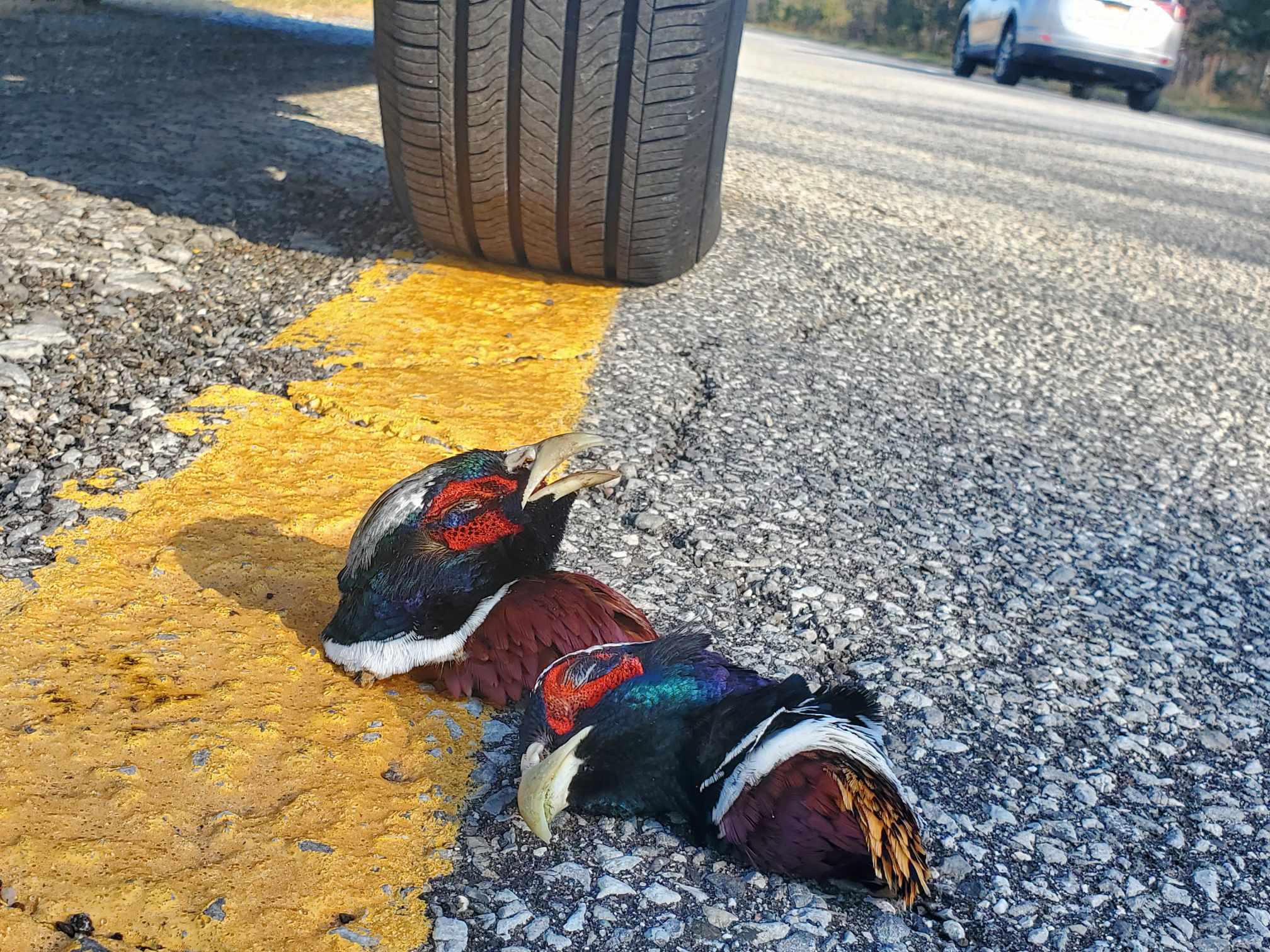
Decapitated birds along the highway
According to Pheasants Forever, a pheasant hunting organization, more than 90% of pen-raised pheasants are killed by predators, with nearly half dying within just one week of release. These two young boys were found decapitated alongside a Sunrise Highway service road between an Eastport hunting club and a DEC release site on Long Island.
Breeding the next pandemic
In 2023, 7,000 pheasants were killed at Reynolds Game Farm after hundreds tested positive for highly pathogenic avian influenza (HPAI)—a virus with a mortality rate up to 100 times higher than COVID-19. This outbreak followed the closure of the privately operated Spring Game Farm after an outbreak in 2022, underscoring the ongoing biosecurity risks of large-scale bird breeding operations in New York.
When the DEC abandons birds infected or exposed to disease, it risks spreading deadly pathogens to wild birds and the public. Intensive breeding facilities like Reynolds Game Farm create ideal conditions for viruses to mutate and spill over to humans. Diseases such as HPAI, swine flu, SARS, MERS, and antibiotic-resistant infections have all been linked to factory farming systems like the DEC’s.
Humane Long Island has rescued numerous pheasants abandoned through the program, many suffering from parasite infestations, fatal respiratory conditions, and severe malnutrition. These rescues highlight that the DEC’s program is not only cruel and wasteful—it is a public health risk and a biological time bomb.
Teaching cruelty as conservation
Ring-necked pheasants are so helpless that the DEC promotes them for introducing youths and people with disabilities to hunting. The agency openly admits the program exists “to provide pheasant hunting opportunity, not to restore wild populations.”
The DEC’s day-old pheasant hatching program—which sends schools and agricultural programs day-old chicks to raise before abandoning them to hunting areas—normalizes killing under the guise of conservation, tortures baby birds, endangers highways, and indoctrinates youths into canned trophy hunting. Last year, an intoxicated hunter violently attacked volunteers with Humane Long Island while they tried to rescue an injured pheasant, showing firsthand how this so-called “wildlife education” approach can put humans at risk. The link between animal abuse and violence toward humans is well-documented—New York should not be using “conservation” funds for this purpose.
MOre Humane Long Island is doing to help
STOPping STATE-SPONSORED PHEASANT CRUELTY: CLOSing REYNOLDS FARM AND REDIRECTing $1.4 MILLION TO WILDLIFE REHABILITATION
Humane Long Island is teaming up with Assemblymember Linda Rosenthal to end “state-sponsored cruelty” at Reynold’s Farm, and urging the DEC to redirect $1.4 million in Conservation Fund dollars from this cruelty to licensed, reputable wildlife rehabilitation. Instead of subsidizing the needless suffering of tens of thousands of non-native birds each year, New York should be helping to protect, care for, and restore New York’s native wildlife.
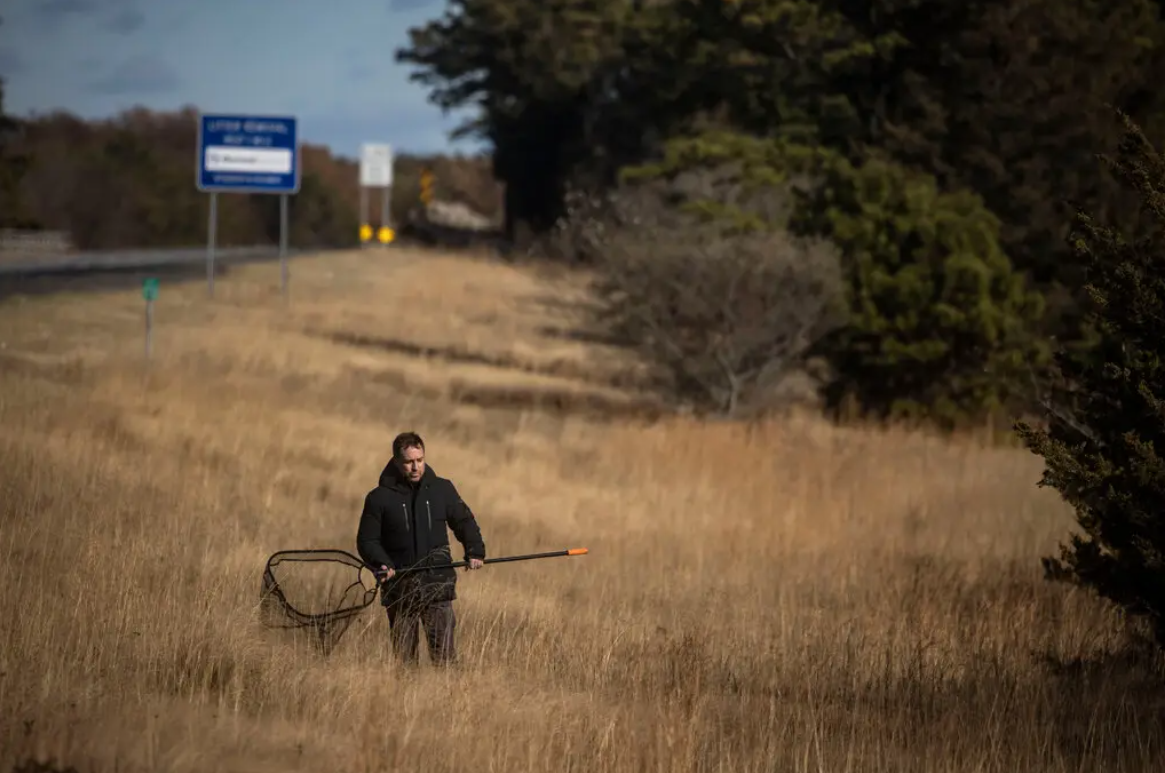
Directly rescuing pheasants shot, hit by cars, and abandoned to the wild
Humane Long Island and our friends at Evelyn Alexander Wildlife Rescue Center directly rescues pheasants who have been shot, hit by cars, or abandoned to the wild, providing them with immediate veterinary care, treatment for injuries, and rehabilitation before placing them with reputable sanctuaries where they can fly, roam, and forage while still being provided with necessary food, shelter, and veterinary care. Many of these birds arrive malnourished, suffering from parasites, or with severe injuries, and without intervention, they would almost certainly die. By rescuing and caring for these animals, Humane Long Island not only saves individual lives but also highlights the cruelty and failures of the state’s pheasant stocking program, demonstrating a humane alternative to treating wildlife as disposable trophies.
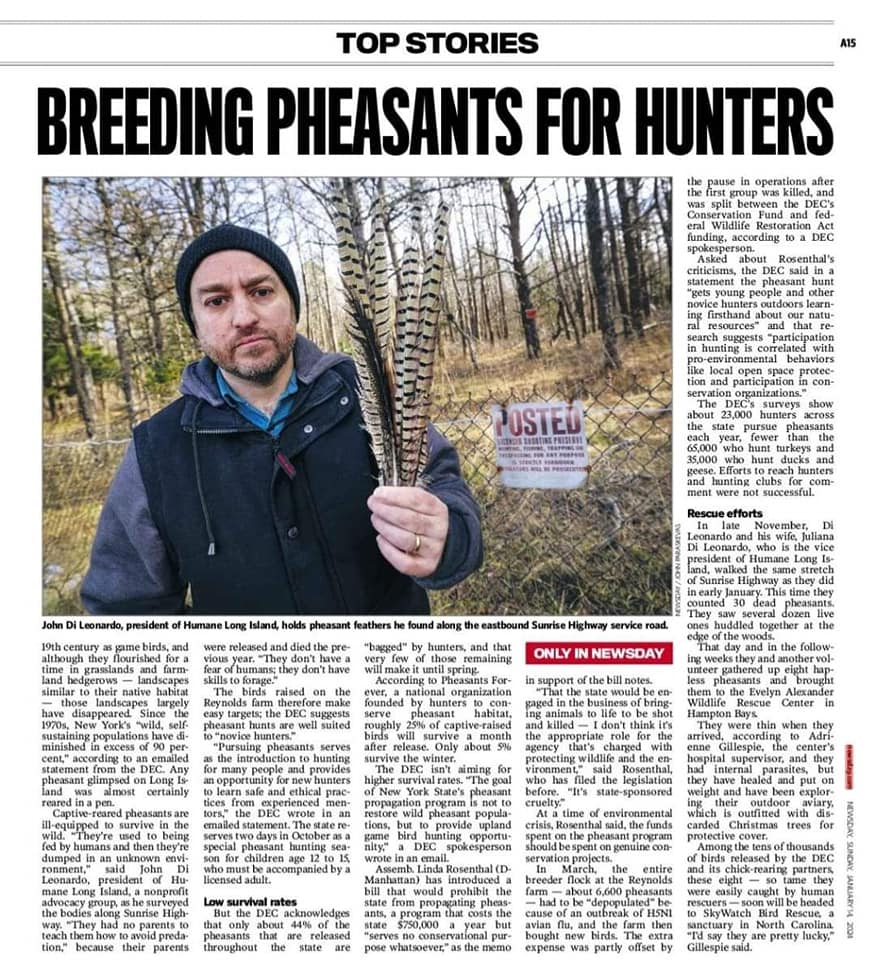
Exposing the DEC’s Canned pheasant hunting program in major media
Humane Long Island has exposed the failures of the DEC’s canned pheasant hunting program in major media outlets, including The New York Times, Newsday, Patch, and Dan’s Papers. Through interviews, investigations, and on-the-ground reporting, the organization is bringing national and local attention to the cruelty, waste, and public safety risks inherent in releasing tens of thousands of non-native birds each year. By shining a light on these practices, Humane Long Island is holding the New York State DEC accountable and advocating for policies that prioritize true conservation and humane treatment of wildlife.