

Fowl Abandonment
When domestic ducks, chickens, and other fowl are dumped in the wild, they face starvation, predators and extreme weather—and our ecosystems pay the price. Learn how fowl abandonment affects animals and nature alike, and discover how you can help protect these vulnerable birds and the environment they never asked to enter.
§ 355. Abandonment of animals. A person being the owner or possessor, or having charge or custody of an animal, who abandons such animal, or leaves it [sic] to die in a street, road or public place, or who allows such animal, if it [sic] become disabled, to lie in a public street, road or public place more than three hours after he receives notice that it [sic] is left disabled, is guilty of a misdemeanor, punishable by imprisonment for not more than one year, or by a fine of not more than one thousand dollars, or by both.
Duck Dumping
Who are domestic ducks and where do they come from?
Just like our companion and farmed animals, domestic ducks were domesticated by humans thousands of years ago. Years of selective breeding have produced animals vastly different from their wild counterparts, both physiologically and psychologically, just like dogs and wolves. Bred for either egg or meat production, domestic ducks have tiny wings, large bodies and little to no natural camouflage. They typically cannot fly and are incapable of migration, leaving them defenseless—literally sitting ducks for predators and cruel people when abandoned to the wild.
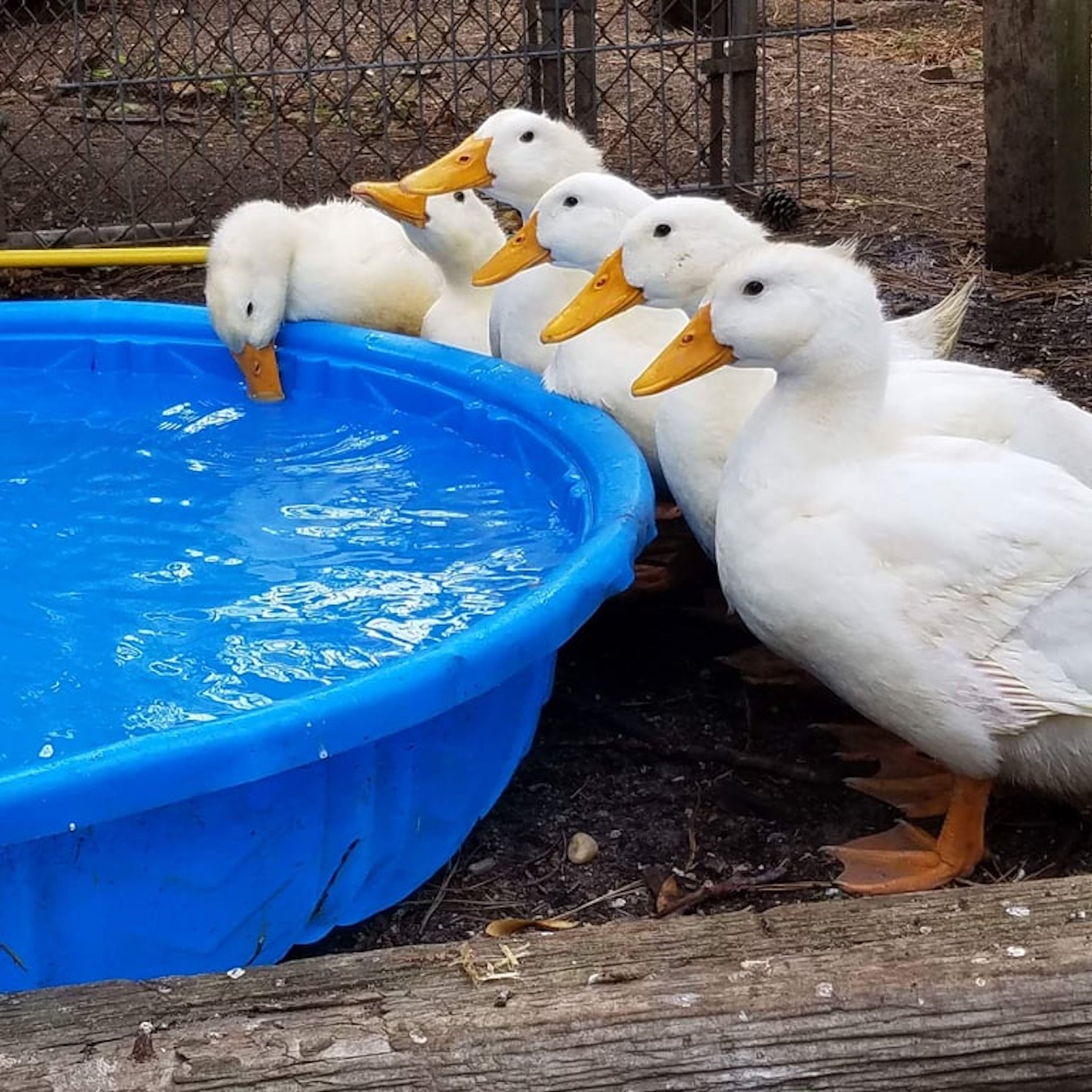
Domestic ducks are as different from wild ducks as a house cat is from a tiger.
Unlike wild ducks, domestic ducks lack survival skills. Many are hatched in incubators and never learn how to forage or protect themselves. When dumped on ponds, they often starve within days, fall prey to predators, or suffer cruelty from humans. Winter is even harsher—frozen ponds trap them in place, leaving them to freeze, dehydrate, or starve. Those who survive may be captured and killed by exterminators or USDA Wildlife Services. These “sitting ducks” are innocent victims of human neglect.

Harry was one of nearly 100 domestic ducks Humane Long Island rescued from Baldwin Harbor between 2020 and 2021.
When we found her, Harry was suffering from a bacterial eye infection as well as wry neck, niacin deficiency, and angel wing—a trifecta of developmental disabilities. After several months of successful rehabilitation, Harry found her forever home with one of our board members in Virginia until she passed away peacefully a year later due to complications from her initial neglect.
‘Invasive’ Domestic waterfowl threaten ecosystems
When domestic ducks and geese are released into the wild, they wreak havoc on natural ecosystems. Unlike migratory wild waterfowl, domestic birds stay put, overeat native plants—including roots—and prevent ecosystems from recovering.
They can also spread serious diseases like HPAI, West Nile Virus, E. coli, and Salmonella to wild populations. If domestic birds breed with wild species, their flightless offspring face the same dangers, further disrupting the balance of nature. The National Park Service warns that invasive species—often once pets—pose a critical threat to native biodiversity.
Disclaimer: Domestic ducks and geese are not to blame for these problems—their plight is entirely the result of human abandonment.
Why lethal roundups don’t solve the problem: Killing the birds may temporarily remove some animals, but it does nothing to prevent future dumping. As long as people continue abandoning domestic ducks and geese, the cycle—and the ecological damage—will continue. True solutions require preventing abandonment in the first place and promoting responsible care and placement.

The curious case of Muscovy ducks
Domestic ducks come from just two species: the Mallard (Anas platyrhynchos) and the Muscovy Duck (Cairina moschata). Mallard breeds include Pekins, Runners, and most other domestic varieties, while Muscovys are easily recognized by their red facial masks, called caruncles.
Although domestic Muscovy ducks are better flyers than domestic Mallards, neither can migrate. Native to South and Central America, abandoned Muscovys in the U.S. and Canada often suffer hypothermia or frostbite, while in warmer states they are labeled “invasive” and frequently rounded up and killed.
Desertion of Chickens, Peafowl, and other domestics
Why rescue chickens are in crisis
As factory farm conditions make headlines and meat and egg prices soar, suburban “panic-buying” of chicks has skyrocketed—leaving more birds in need of rescue than ever before.
Most people don’t realize that chickens descended from red junglefowl, which weigh just a pound and naturally lay only 10–15 eggs per year. Years of selective breeding have stripped domestic chickens of survival instincts and flight, leaving them vulnerable while giving industrial farms traits that harm their health.
Broilers—raised for meat—suffer from morbid obesity, while layers—raised for eggs—are pushed to produce 300+ eggs a year, often at the cost of their lives. Chickens can live over ten years, but when egg production slows, many are abandoned—left to face predators, freezing weather, or starvation. Some are even dumped before they lay a single egg, as most buyers don’t realize it takes six months for a chick to mature.
The result: a growing population of abandoned, vulnerable chickens in desperate need of rescue.
Roosters: Devoted but vulNERABLE
Roosters are loyal protectors and caring fathers—but because they don’t lay eggs and their crowing annoys neighbors, they’re often abandoned.
Bred for large bodies and tiny wings, most domestic roosters can’t fly away from predators. With natural spurs removed, they have virtually no defense, leaving them helpless in the wild.

Chickens originated in Southern Asia—not North America.
Red junglefowl—the wild ancestors of domestic chickens—are native to Southern Asia and India. They weigh barely a pound and naturally lay just 10–15 eggs per year in a single clutch. In contrast, domestic chickens have been bred for traits that make survival in the wild nearly impossible: many have tiny, flightless wings, underdeveloped spurs, and insufficient feathering to withstand cold Northern climates. When abandoned, they are defenseless against predators and harsh weather.

Peafowl and pheasants hail from Asia, while guineafowl come from Africa—none are native to North America.
Bought as yard ornaments or for tick control, peafowl, pheasants, and guineafowl are often released into gardens without proper housing or care. Their loud calls and habit of scratching cars can provoke neighbors to harm them, and in some areas they have been targeted in lethal roundups by private exterminators or USDA Wildlife Services.
Even if left alone, these birds face harsh odds: exposure to the elements, traffic, and parasites to which they have no natural immunity. The female pheasant pictured above was rescued in Babylon after being abandoned with severe fungal and bacterial infections. Despite a month of intensive care, she tragically did not survive.
What Humane Long Island is Doing to Help
Thousands Rescued. Millions Educated.
Humane Long Island has saved countless domestic fowl—ducks, chickens, turkeys, peafowl, and more—from abandonment, cruelty, and slaughter across the Northeast.
Through high-impact campaigns and our international Duck Defenders program—featured in National Geographic, The New York Times, and People—we share our expertise to protect birds everywhere.
Facing a waterfowl issue in your community? Duck Defenders can guide you. Note: we’re not a sanctuary, and our fosters are reserved for birds in critical need. You’ll be prepared to act locally after consulting with us.

See an abandoned duck? Don’t walk away. By the time a rescue arrives, it may already be too late—as tragically happened to the mama duck above.
After this photo was shared in an international pigeon rescue group, Humane Long Island’s Duck Defenders team guided the finder through every step of the rescue. We provided all the supplies needed for fostering and placed the duckling in a loving home just under an hour away—complete with a pond, feathered friends, and predator-proof housing.
If you come across abandoned domestic fowl on Long Island, in New York City, or anywhere in the U.S., stay with the animal and call us immediately at 516-592-3722. For other domestic animals, contact your local shelter or SPCA. Most importantly: never leave the animal alone until help arrives.

Humane Long Island's Duck defenders program offers a $1,000 Bounty on duck dumpers
Not only is animal abandonment cruel, but it’s illegal. Duck Defenders will pay you up to $1,000 for information leading to the arrest and conviction on cruelty charges of anyone who abandons a domestic duck or other species of poultry. This offer applies to ducks throughout North America and is extended to all domestic fowl from Manhattan to Montauk.
Investigating Poultry Suppliers
Humane Long Island conducts independent investigations and partners with law enforcement in sting operations targeting poultry stores that sell day-old chicks in illegal quantities.
In 2022, our investigation of The Barn Pet Feed & Supplies was featured on Inside Edition. In 2023, the Suffolk County DA’s Office filed misdemeanor charges against Long Island Poultry, Raleigh’s Poultry Farm, Inc., and Agway of Port Jeff — all of which resulted in convictions, holding these suppliers accountable for violating animal welfare laws.
Promoting responsible Adoption
Every animal deserves a safe, loving home—whether they have fur, feathers, or scales. Choosing to adopt from shelters or rescues instead of buying from breeders, pet stores, or online sellers gives homeless animals a second chance at life and reduces the demand for facilities that prioritize profit over welfare. Millions of dogs, cats, birds, reptiles, amphibians, and farmed animals are left to suffer or are euthanized each year simply because there aren’t enough homes for them.
Remember: Adoption is only ethical if you are fully prepared to meet the physical, emotional, and environmental needs of the animal.