

Report Cruelty or Injured wildlife
Need to report animal cruelty, a stray animal, or injured wildlife? Stay calm and follow the steps below so we can assist you quickly and effectively.
Found a lost or mistreated Domestic Animal?
Suffolk County
👮Animal Cruelty: If you are reporting an emergency, or that an animal is about to be imminently injured or killed, call 911 immediately. Otherwise, contact the Suffolk County District Attorney Office’s Biological, Environmental and Animal Safety Team (BEAST) via their contact form.
🐕🐈Lost Animals: If you found a lost domestic animal, please contact your local open-admission Town Animal Shelter. Local shelters can scan for a microchip, tell you if anyone has called in looking for the animal, and care for the animal until they are reunited or a new home is found. After a brief stray hold, you can apply to adopt yourself if you so choose, but please don’t assume the animal’s family is not looking for them.
🐇Rabbits: For help with lost or abandoned domestic rabbits, please contact Long Island Rabbit Rescue Group or All About Rabbits Rescue.
🪿🦚🐓🦥🦘Industry Cruelty: To report cruelty at an industrial operation like a petting zoo, live slaughter market, or pet mill; or to report a hatching project or pigeon-poaching; or to get help with an abandoned or escaped farmed or exotic animal (domestic ducks, pheasants, peafowl, sloths, wallabies, etc.) please contact us at 516-592-3722 or John@humaneli.org.
🚫🚗💨If you are unable to contain a lost or abandoned animal yourself, please do not leave the area until help has arrived! Remain a few feet away from the animal so they do not feel threatened but make sure you can still keep an eye on the animal. Remember, a frightened animal will instinctually try to hide and can disappear very quickly.
Nassau County
👮Animal Cruelty: If you are reporting an emergency, or that an animal is about to be imminently injured or killed, call 911 immediately. Otherwise, contact the Nassau County SPCA at 516-843-7722 or via their contact form.
🐕🐈Lost Animals: If you found a lost domestic animal, please contact your local open-admission Town Animal Shelter. Local shelters can scan for a microchip, tell you if anyone has called in looking for the animal, and care for the animal until they are reunited or a new home is found. After a brief stray hold, you can apply to adopt yourself if you so choose, but please don’t assume the animal’s family is not looking for them.
🐇Rabbits: For help with lost or abandoned domestic rabbits, please contact Long Island Rabbit Rescue Group or All About Rabbits Rescue.
🪿🦚🐓🦥🦘Industry Cruelty: To report cruelty at an industrial operation like a petting zoo, live slaughter market, or pet mill; or to report a hatching project or pigeon-poaching; or to get help with an abandoned or escaped farmed or exotic animal (domestic ducks, pheasants, peafowl, sloths, wallabies, etc.) please contact us at 516-592-3722 or John@humaneli.org.
🚫🚗💨If you are unable to contain a lost or abandoned animal yourself, please do not leave the area until help has arrived! Remain a few feet away from the animal so they do not feel threatened but make sure you can still keep an eye on the animal. Remember, a frightened animal will instinctually try to hide and can disappear very quickly.
New York City
👮If you are reporting an emergency, or that an animal is about to be imminently injured or killed, call 911 immediately. Otherwise, call 311. For anonymous tips, use the NYPD Crime Stoppers tip line at 800-577-TIPS (8477), the Crime Stoppers website, or the NYPD Crime Stoppers mobile app, however, please keep in mind that witnesses are often essential to an investigation and successful prosecution.
🐕🐈If you found a lost domestic animal—including a farmed or exotic animal—please bring them directly to your nearest Animal Care Center of New York City (ACC). Farmed and exotic animals will be transferred to a New Hope Partner like Humane Long Island.
🐇Rabbits: For help with lost or abandoned domestic rabbits, please contact All About Rabbits Rescue.
🪿🦚🐓🦥🦘Industry Cruelty: To report cruelty at an industrial operation like a petting zoo, live slaughter market, or pet mill; or to report a hatching project or pigeon-poaching; or to get help with an abandoned or escaped farmed or exotic animal (domestic ducks, pheasants, peafowl, sloths, wallabies, etc.) please contact us at 516-592-3722 or John@humaneli.org.
🏇🛷Horse-drawn carriage cruelty: If you are reporting a horse who has escaped, collapsed, or crashed, or is about to be imminently injured or killed, call 911 immediately and follow up with Edita Birnkrant at 917-940-2725. To report other cruelty or violations related to horses in New York City’s horse-drawn carriage industry, please fill out this 311 complaint and forward your complaint to edita@nyclass.org.
🚫🚗💨If you are unable to contain a lost or abandoned animal yourself, please do not leave the area until help has arrived! Remain a few feet away from the animal so they do not feel threatened but make sure you can still keep an eye on the animal. Remember, a frightened animal will instinctually try to hide and can disappear very quickly.
Found an injured or orphaned Wild animal?
Step 1 – Review List of Applicable Rescue Reminders📋
Baby Animals 🐣
Not all baby or juvenile wildlife seen alone need to be rescued. Many species—such as cottontails and deer—routinely leave their young unattended for long periods, and it’s completely normal for fledgling songbirds to spend up to a week on the ground while learning to fly.
One important exception: a baby opossum smaller than a guinea pig always needs rescue, as they cannot survive on its own.
Remember, a baby animal’s best chance of survival is to remain in the wild. Unless the animal is visibly injured or you are certain it is orphaned, contact one of the recommended wildlife hospitals below before intervening.
Opossums: Check mama's pouch
If you find a deceased opossum, check her pouch for babies. Opossum mothers often carry tiny joeys who may still be alive even after she’s gone. Gently look inside and contact one of the recommended wildlife hospitals below right away—your quick action could save several young lives.
TURTLE CROSSINGS 🐢
If you find a turtle crossing the road, do NOT relocate them. Instead, gently help the turtle cross in the same direction they were already heading, even if the destination doesn’t look ideal. Turtles cross roads for important reasons—seeking mates, nesting sites, or safe places to brumate during winter.
If you encounter a turtle who has been struck by a vehicle, do NOT assume they are dead, no matter how severe the injuries appear. Because turtles have extremely slow metabolisms, they can remain alive—and suffering—for long periods.
Always bring the turtle to one of the recommended wildlife hospitals below. They can assess the turtle’s condition, provide treatment if possible, or offer humane euthanasia if recovery isn’t an option.
Glue traps
If you find an animal stuck on a glue trap, do NOT attempt to free them yourself. First, cover any exposed parts of the trap with tissues or paper towels. Then, carefully place the animal—still on the trap—inside a cardboard box and contact the appropriate hotline listed below. Animals caught in glue traps often suffer from injuries, feather or fur loss, dehydration, and extreme stress, and they require professional medical care and rehabilitation before they can be safely released.
Glue traps are cruel and indiscriminate. Trapped animals panic and struggle, which only makes them more stuck, often tearing off fur, feathers, or even skin. Some may break bones or injure themselves severely in a desperate attempt to escape. Always choose humane, non-lethal wildlife solutions—never use glue traps for any animal.
Entanglements 🎣🪝
Animals entangled in fishing gear, litter, or netting often suffer serious injuries, exhaustion, and extreme stress. Do NOT attempt to remove hooks yourself. If you do free an animal from entanglement, do NOT release them back into the wild without first consulting one of the recommended wildlife hospitals listed below. Even if no injuries are visible, the animal will need a full examination and possibly treatment before they can safely return to the wild.
The best way to prevent fishing-related injuries is by leaving animals off your plate and avoiding fishing altogether. All fishing—even “catch and release”—causes intense pain, shock, and suffocation for the animals involved. Commercial fishing practices, including enormous trawling nets that stretch for miles, ensnare countless turtles, seabirds, dolphins, and other wildlife as bycatch. Shockingly, bycatch accounts for up to 40% of all animals killed by the global fishing industry, while these nets devastate fragile marine ecosystems already threatened by climate change.
Do not feed or water 🚱
Never feed or give water to an injured or orphaned wild animal unless a recommended wildlife hospital below specifically instructs you to do so. While it may seem compassionate, the wrong food or feeding method can cause serious harm—or even death—because different species have very specific dietary and hydration needs. Injured animals are also at risk of aspirating liquids or food, which can lead to fatal pneumonia.
Do Not Pet, pose for selfies, or keep the animal for any length of time 🚫🤏
Handling wild animals can do more harm than good. Stress from human contact can worsen their condition, and species like rabbits and deer are particularly vulnerable to capture myopathy—a catastrophic breakdown of muscles that releases toxins, potentially damaging the heart and kidneys and sometimes causing death. Even if an animal survives, becoming habituated to humans can severely reduce their chances of surviving once released.
The safest way to help is to keep the animal in a warm, dark, quiet space, away from humans and other animals, and avoid handling them. Contact one of the recommended wildlife hospitals listed below immediately for expert guidance.
Do Not leave the scene 🚫🚗💨
If you are unable to contain the animal yourself, please do not leave the area until help has arrived! Remain a few feet away from the animal so they do not feel threatened but make sure you can still keep an eye on the animal. Remember, a frightened animal will instinctually try to hide and can disappear very quickly.
Step 2 – Take a photo/Video 📷
Take a photo or video of the animal in distress. This will allow the wildlife hospital to deduce important information such as species, age, and the animal’s condition.
Step 3 – Contain the animal 🪤
If you find an injured or orphaned wild animal, the safest way to help is to contain them with care and minimal stress. If available, wear gloves to protect yourself. Gently place the animal in a small, ventilated box or pet carrier lined with a soft towel or paper towels. Do not handle the animal more than necessary—stress from handling can worsen their condition. Keep the container in a warm, dark, and quiet place, away from people and other animals. Do not feed or give water unless instructed by a licensed wildlife rehabilitator. This could be the difference between life and death.
💡Rescue Tips
We do not recommend using towels or blankets to catch most animals. These tools are slow and easy to see coming. Make yourself as small as possible: tie back your hair, take off your jacket, and wear tight-fitting clothes that don’t blow in the wind. Watch the animal through your peripherals rather than head on.
If the animal is still mobile and catching by hand fails spectacularly, consult one of the below recommended wildlife hospitals about the possibility of using bait:
🦝🐿️ 🦨If advised to do so, you can trap most mammals with “Have-A-Heart” style traps available at your local Home Depot or Lowe’s.
🦢🦆Waterfowl are best caught by hand by firmly grasping their neck to pull them toward you while they put their head down to eat. Once secured, gently lift their body underneath your arm like a football, firmly pinning their closed wings between your body and theirs to prevent flapping. Waterfowl use their necks like we use our arms, so they are muscular but do not twist their neck in an unnatural direction and avoid grabbing near the base of the skull to reduce risk of injury.
🐦🕊️Still-flighted songbirds and doves can be caught with a DIY stick and box trap. (Laundry baskets with a flap cut into the top for easy retrieval of the bird are cheap and easy to make at home.) Never leave a trap unattended. Animals can hurt themselves trying to escape or find themselves defenseless against predators. We do not recommend using pole-nets as a first resort to capture most animals, but if you must, be sure to hide the net flush behind your body upon approach.
Step 4 – Contact a licensed, reputable wildlife hospital near you 📱
Suffolk County
- Queens, Nassau, & western Suffolk County: Wildlife Center of Long Island is a 501(c)3 non-profit wildlife rehabilitation center & education center located in Huntington, New York. To receive help with an injured or orphaned wild animal, please email photos/videos to info@wildlifecenterli.org. Then follow up by calling 516-674-0982. Please leave a message if they’re with a patient and unable to pick up. Open 7 days, 8 am – 4 pm. 🐦🐿️🦫🦦🦅🦢🦆🦊🐁
- Eastern Suffolk County: Evelyn Alexander Wildlife Rescue Center, located in Hampton Bays, is a not-for-profit corporation dedicated to the rehabilitation of wild animals impacted by encroachment of humans on their habitat. Contact Evelyn Alexander Wildlife Rescue Center regarding animal medical emergencies at (631) 728-WILD (9453). Open 7 days, 9 am – 5 pm. 🦌🦝🦨🐿️🦫🦦🦇🦅🐦🦆🦢🕊️🦊🐁
- Native freshwater turtles and select reptiles and amphibians: Turtle Rescue of the Hamptons has a dedicated team offering exceptional rescue of freshwater and terrestrial turtles and terrapins via a 24-hour hotline in Jamesport, NY. Call (631) 779-3737 or text 516-729-7894. Open 7 days, 7 am – 5 pm. 🐢🦎🐸
- Seals, sea turtles, dolphins, porpoises and small toothed whales: The New York Marine Rescue Center (NYMRC), located in Riverhead, maintains the only marine mammal and sea turtle rehabilitation center in New York State. Reach its stranding hotline at (631) 369-9829. Please note that NYMRC is a separate entity from the Long Island Aquarium, which we do not endorse. 🐬🐳🐢🦭
Nassau County
- Queens, Nassau, & western Suffolk County: Wildlife Center of Long Island is a 501(c)3 non-profit wildlife rehabilitation center & education center located in Huntington, New York. To receive help with an injured or orphaned wild animal, please email photos/videos to info@wildlifecenterli.org. Then follow up by calling 516-674-0982. Please leave a message if they’re with a patient and unable to pick up. Open 7 days, 8 am – 4 pm. 🐦🐿️🦫🦦🦅🦢🦆🦊🐁
- Native freshwater turtles and select reptiles and amphibians: Turtle Rescue of the Hamptons has a dedicated team offering exceptional rescue of freshwater and terrestrial turtles and terrapins via a 24-hour hotline in Jamesport, NY. Call (631) 779-3737 or text 516-729-7894. Open 7 days, 7 am – 5 pm. 🐢🦎🐸
- Seals, sea turtles, dolphins, porpoises and small toothed whales: The New York Marine Rescue Center (NYMRC), located in Riverhead, maintains the only marine mammal and sea turtle rehabilitation center in New York State. Reach its stranding hotline at (631) 369-9829. Please note that NYMRC is a separate entity from the Long Island Aquarium, which we do not endorse. 🐬🐳🐢🦭
New York City
- Queens, Nassau, & western Suffolk County: Wildlife Center of Long Island is a 501(c)3 non-profit wildlife rehabilitation center & education center located in Huntington, New York. To receive help with an injured or orphaned wild animal, please email photos/videos to info@wildlifecenterli.org. Then follow up by calling 516-674-0982. Please leave a message if they’re with a patient and unable to pick up. Open 7 days, 8 am – 4 pm. 🐦🐿️🦫🦦🦅🦢🦆🦊🐁
- New York City: Wild Bird Fund is NYC’s only wildlife rehabilitation and education center, caring for injured, sick and orphaned birds and small mammals 7 days a week. Bring injured wild animals directly to Wild Bird Fund, located at 565 Columbus Avenue (Bet. 87th & 88th St.), New York, NY 10024. Wild Bird Fund can be reached at (646) 306-2862, but it is recommended to bring the animal directly rather than calling. Open 7 days, 9 am – 7 pm. 🐦🐿️🦅🦆🦢🦊🐁
- Native freshwater turtles and select reptiles and amphibians: Turtle Rescue of the Hamptons has a dedicated team offering exceptional rescue of freshwater and terrestrial turtles and terrapins via a 24-hour hotline in Jamesport, NY. Call (631) 779-3737 or text 516-729-7894. Open 7 days, 7 am – 5 pm. 🐢🦎🐸
- Seals, sea turtles, dolphins, porpoises and small toothed whales: The New York Marine Rescue Center (NYMRC), located in Riverhead, maintains the only marine mammal and sea turtle rehabilitation center in New York State. Reach its stranding hotline at (631) 369-9829. Please note that NYMRC is a separate entity from the Long Island Aquarium, which we do not endorse. 🐬🐳🐢🦭
Westchester
- Westchester: Animal Nation rescues, rehabilitates, and releases hundreds of orphaned and injured wild animals in Westchester, Rockland, Fairfield, and surrounding areas. Reach Animal Nation at (914) 400-6014. Open 7 days, hours vary. 🦌🦝🐿️🦫🦦🦇🦅🐦🦆🦢🕊️🦊🐁
What Humane Long Island is doing to help
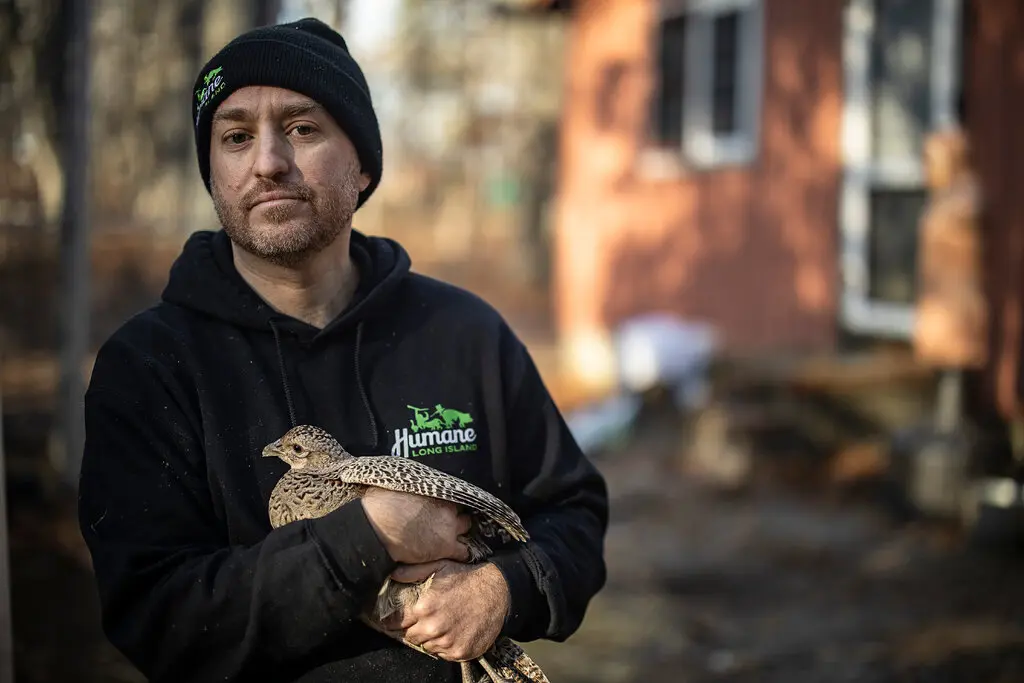
Campaigning to End the DEC’s misuse of $1.4 million in conservation funds for canned pheasant hunts and Redirect the money to reputable wildlife rehabilitation
Ring-neck pheasants—non-native Chinese birds bred by the New York State Department of Environmental Conservation (DEC) on a state-funded “factory farm” using $1.4 million annually from the NYS Conservation Fund—are so helpless that the DEC markets them as ideal for introducing youths and people with disabilities to hunting. The agency openly admits that the state’s artificial “pheasant propagation program” exists to provide hunting opportunities, not to restore wild pheasant populations.
Tragically, most of these birds never make it long enough to even be hunted. Over 90% of the chicks are killed by predators, while others die from starvation or are struck by vehicles.

Raising Standards for wildlife rehabilitation in New York State
In New York State, the bar for becoming a licensed wildlife rehabilitator is alarmingly low. Applicants need only score an 80 on an open-book, online exam with the answers provided in advance. The DEC requires no veterinary references, no pre-licensing inspections, no routine or random inspections, and no supervised mentorship hours before granting a license.
As a result, Humane Long Island has uncovered a troubling rise in cases where licensed rehabilitators have been hoarding wildlife in dangerous, unsanitary conditions with virtually no oversight.
Humane Long Island is urging the DEC to immediately begin inspecting all licensees and to pause the issuance of new home-based rehabilitation licenses until the agency adopts basic safeguards. These measures are essential to prevent unqualified or dangerous individuals from keeping wild animals as pets and to ensure the public is not misled into trusting rogue rehabilitators as legitimate rescuers.

Rescuing Farmed and Exotic Animals from Manhattan to Montauk
Humane Long Island is both a direct rescue organization and a recognized leader in animal protection and advocacy. We have rescued thousands of wild and farmed animals from live-slaughter markets, unlicensed exhibitors, neglect, and injury. Our team transports wild animals to licensed rehabilitators for medical care and provides hands-on treatment, fostering, and transport for farmed animals—primarily fowl, who represent 95% of farmed animals in the U.S.—placing them in reputable sanctuaries and homes nationwide.
Featured in National Geographic and The New York Times, Humane Long Island’s international Duck Defenders program is the premier resource for domestic waterfowl rescue and advocacy in North America. The program has saved thousands of ducks and geese and offers expert guidance to agencies across the country on humane, effective solutions to waterfowl-related challenges in their communities.
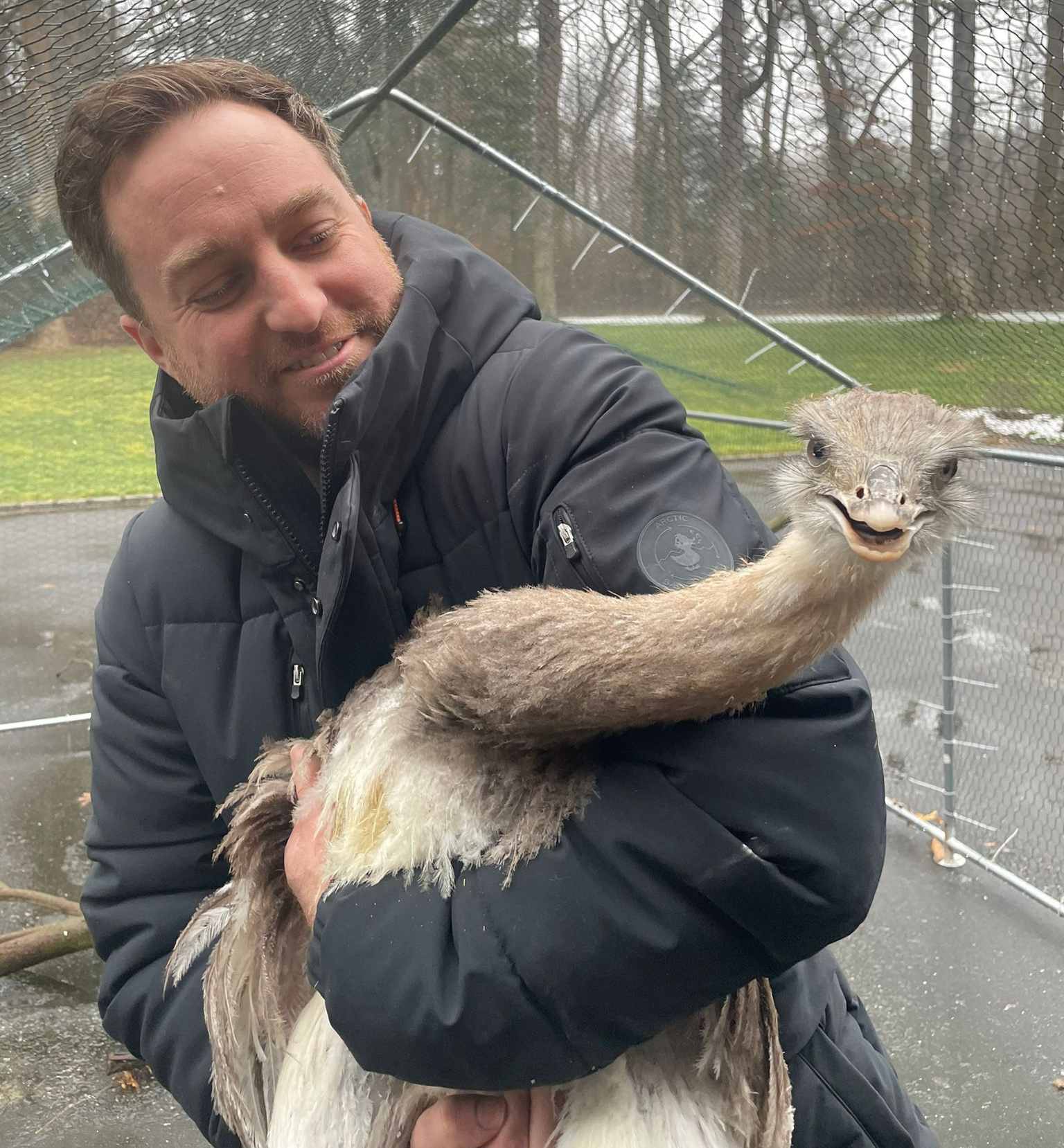
Investigating and shutting down New York’s worst animal offenders
Humane Long Island is one of North America’s leading grassroots animal advocacy organizations, having closed slaughterhouses and exotic animal petting zoos, halted the expansion of live-slaughter markets and exploitative mall aquarium chains, and banned traveling exotic animal acts from New York City to Montauk.

Stopping Wildlife Roundups and exposing Taxpayer Waste
