

The 'Humane' Myth
Agribusiness promotes labels like “local” or “humanely raised” to make cruel practices seem ethical—protecting profits while animals still suffer. There is no humane way to kill someone who wants to live.
The Truth Agribusiness Doesn’t Want You to Know
Agribusiness companies benefit when consumers believe that meat, eggs, and dairy can be produced “ethically.” Labels like “cage-free,” “free-range,” or “humanely raised” give the illusion of kindness, while the reality is that animals are still bred, confined, and ultimately killed without their consent. By promoting the idea of “humane meat,” agribusiness deflects criticism, protects profits, and keeps consumers buying products that are inherently cruel. The truth is simple: no method of killing someone who wants to live can ever be truly humane.
Read on to see local examples of the humane myth exposed right here on Long Island.
Inside your ‘local’ factory farm: Crescent Duck
Long Island’s last “local” duck farm should have followed the path of Long Island’s other duck farms, which closed amid serious concerns about animal welfare, environmental damage, and the spread of dangerous diseases. Instead, Crescent Duck Farm in Aquebogue persists as one of the last remnants of an outdated industry, slaughtering roughly 4% of all ducks on U.S. farms while confining them to cruel, filthy conditions and denying them access to the outdoors.
At Crescent Duck, more than one million ducklings are killed each year. From the very first day of life, these fragile birds are crammed into overcrowded, unsanitary indoor sheds, denied access to water and space necessary for swimming, preening, or even performing the most basic natural behaviors. The crowding is so extreme that the farm routinely severs the sensitive tips of their beaks to prevent stress-driven cannibalism and self-mutilation, a grim testament to the suffering built into this industrial operation.
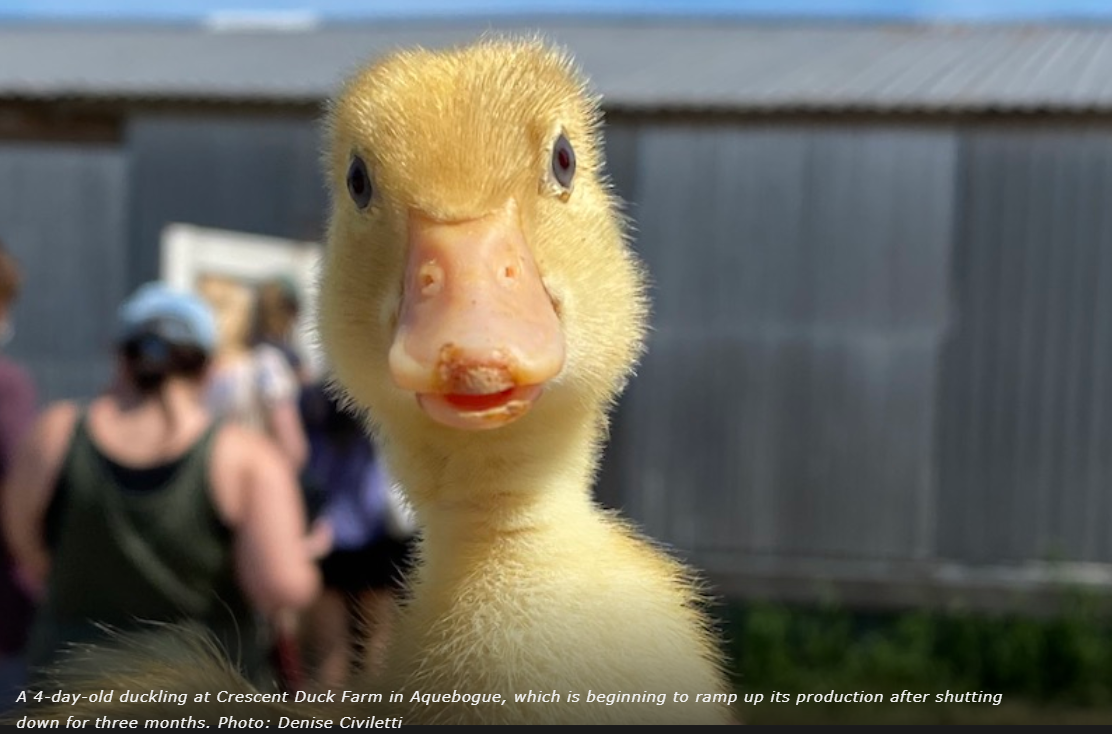
If they survive until six to eight weeks old, the ducklings’ throats are slit while they are still peeping.
The consequences of such factory-farming practices extend far beyond the animals. After a recent avian influenza outbreak, Crescent Duck Farm sought nearly a million dollars in federal reimbursement, forcing taxpayers to subsidize the very industry whose overcrowded, unsanitary conditions breed deadly diseases. Avian influenza has a human mortality rate roughly 100 times higher than COVID-19, and experts warn that it is poised to be the next pandemic.

Long island Poultry & ‘small Scale’ eggs
Long Island Poultry claims: “we prefer to buy our birds from smaller companies where the wellness and health of the chickens are better maintained.” Yet, photographs taken outside their business expose the truth—their supplier is Meyer Hatchery, an Ohio-based factory farm that hatches over one million chicks each year.
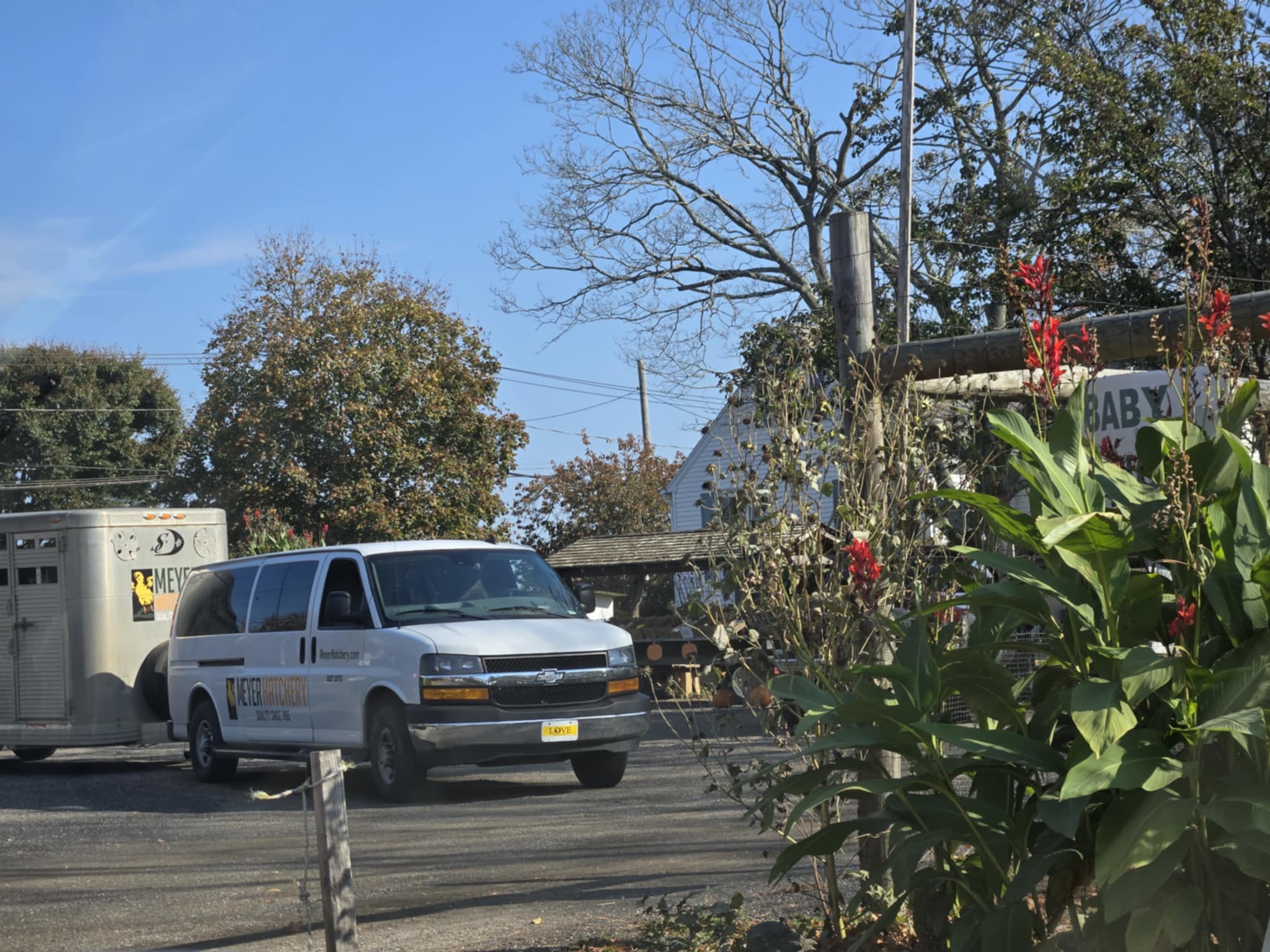
Meyer Hatchery was cited by the Ohio Department of Agriculture for suffocating day-old male chicks in plastic bags, a method commonly used in the egg industry to dispose of males who cannot lay eggs. The company’s so-called “fix”? Replacing the bags with gas chambers to kill the baby birds more efficiently. It takes five minutes for the baby birds to die.
The cruelty extends to the female birds as well. All domestic chickens are descended from red junglefowl, which naturally weigh just over a pound and lay only 10–15 eggs per year in a single clutch. Over thousands of years, humans have manipulated their reproductive systems for intense egg production, forcing their bodies to lay nearly every day. This relentless pace causes severe reproductive disease, deformities, and early mortality. By the time most industrial laying hens are two years old, their bodies are too frail to continue, and they are routinely slaughtered—despite being just a fraction of their natural lifespan.
Across the industry, other methods of killing male chicks are equally brutal. In many hatcheries, day-old roosters are ground up alive, thrown into industrial grinders, or suffocated in gas chambers immediately after hatching. These practices expose the systemic cruelty behind “egg production” and underscore the importance of ethical alternatives, such as adopting rescued hens and choosing plant-based egg substitutes.
Long Island Poultry has also been implicated in selling day-old chicks in illegal quantities ahead of Easter—for which many baby birds are used as photo props in Easter baskets and later abandoned. Investigations into similar practices have drawn national attention. In 2022, our investigation of The Barn Pet Feed & Supplies was featured on Inside Edition. In 2023, our tip to the Suffolk County DA’s Office resulted in misdemeanor charges against Long Island Poultry, Raleigh’s Poultry Farm, Inc., and Agway of Port Jeff—all of which resulted in convictions, holding these suppliers accountable for violating animal welfare laws.
Carlos lauro’s ‘Organic’ Farm
Carlos Lauro of Aquebogue ran a small, “organic” slaughterhouse in Riverhead until 2024, when he was arrested for shooting puppies. He pleaded guilty to fatally shooting a German Shepherd with a rifle and was sentenced to one year in jail and a 20-year ban on owning or possessing animals. Humane Long Island rescued nearly 100 animals from Lauro’s slaughterhouse and an adjacent property, including three bulls, ten freezing piglets, a dozen waterfowl, dozens of chickens, sheep, goats, and a rabbit. Investigators also discovered skeletal remains and decomposing carcasses scattered across the property—in cages, carriers, a woodpile, and even a bathroom.
In 2025, following a tip from Humane Long Island, Lauro was jailed again on new charges of animal cruelty and contempt of court after apparently trying to restart his backyard breeding and slaughter operations. Authorities confiscated more than 50 animals, including distressed puppies and underweight chickens suffering from mutilated beaks and frostbite. Humane Long Island took custody of 13 roosters and 10 hens, placing them in vegan sanctuaries where they’re loved and will never be eaten.
Labeling meat “organic” or “antibiotic-free” may make shoppers feel good—but these labels often mask cruelty. Animals are routinely denied life-saving treatment when sick in order to comply with these labels. Poultry, in particular, are exempt from minimum protections under the federal Animal Welfare Act and Humane Slaughter Act, and USDA enforcement is notoriously weak. Humane Long Island filed a complaint against Lauro’s illegal slaughterhouse as far back as 2022; although the USDA ordered him to shut down, authorities failed to act until he was documented killing puppies two years later.

‘Fresh’ meat from Live Slaughter Markets
Animals sold as “fresh” at live slaughter markets are often anything but. Each year, Humane Long Island rescues dozens of animals from New York City live slaughter markets suffering from necrotic, rotting wounds, severe staph infections, respiratory disease, and untreated broken bones. Many are too weak to stand, some endure permanent disabilities, and tragically, others die within 24 hours despite emergency medical intervention.
The dangers extend far beyond cruelty. Live slaughter markets—especially in densely populated urban centers like New York City—serve as breeding grounds for zoonotic diseases. Animals confined in overcrowded, unsanitary conditions frequently carry pathogens such as Salmonella, E. coli, and avian influenza. Blood, feces, and other bodily fluids often spill into public streets, drains, and sidewalks, contaminating neighborhoods and spreading pathogens far and wide. In a global travel hub like NYC, these markets become potential epicenters for outbreaks that can affect communities locally, nationally, and even internationally.
For a closer look at these risks, read The New York Times investigative report on avian influenza in New York City live slaughter markets, featuring Humane Long Island.
Just three weeks after New York's 80+ live animal markets re-opened following a five day closure due to multiple #avianflu outbreaks, @nyagandmarkets has reported seven new outbreaks affecting thousands of birds in four of NYC’s five boroughs.
— Animal Rights News (@theirturn) March 13, 2025
After visiting four of these wet… pic.twitter.com/vPIR8dbBpW
no such thing as ‘happy cows’ in the dairy industry
The dairy industry is inherently cruel. Cows, like all mammals, produce milk only to feed their babies—but in dairy farming, they are repeatedly impregnated and separated from their calves, leaving both mother and child to suffer intense stress. Male calves, who cannot produce milk, are sold for veal or slaughtered, while female calves are forced into the same cycle of milking. Over time, the physical demands of daily milking cause chronic pain, lameness, mastitis, and other debilitating conditions. Even “organic,” “raw,” or “goat” milk offers no reprieve—these labels do not protect the animals from suffering.
Dairy also poses health risks. Raw milk can carry dangerous pathogens like Salmonella, E. coli, and Listeria, which can cause serious illness or even death. Even pasteurized dairy contributes to health problems, including heart disease, certain cancers, and lactose intolerance, while offering no unique nutritional advantage that cannot be obtained from plant-based alternatives.
The truth is clear: no matter how it’s labeled, dairy comes at a heavy cost—for cows, their calves, and your health. Choosing plant-based alternatives is the compassionate, safe, and healthy choice.

What humane long island is doing to help
SHUTTING DOWN SLAUGHTERHOUSES & HALTING LIVE SLAUGHTER MARKETS ON LONG ISLAND
Humane Long Island has taken decisive action against cruel and illegal slaughter operations, closing backyard butcher operations in Queens and unlicensed slaughter operations in Babylon and Riverhead. We successfully blocked Jamaica Live Poultry from expanding into Islip, preventing a new facility that intended to slaughter 40,000 birds annually. Additionally, we partnered with the Suffolk County District Attorney’s office to secure arrests at three Long Island poultry stores for illegal sales, holding operators accountable and protecting animals.

Rescuing animals from live slaughter markets
Humane Long Island regularly rescues animals from New York City’s live slaughter markets, trading vegan meals for their lives and providing them with safety, care, and a second chance at life. Your donation helps supply shelter, food, and medical attention—transforming rescued animals’ suffering into stories of hope and new beginnings.

Distributing Plant-based food to New York Communities
The most powerful way to help farmed animals is simply by not eating them. hatcheries grind countless male chicks alive because they cannot lay eggs, and baby bulls are slaughtered for veal at just a few months old. In fact, every animal raised for meat in the United States is killed while still a baby.
Choosing a vegan lifestyle allows each person to save nearly 200 animals annually, dramatically reduce their environmental footprint, and help build a more compassionate, sustainable world. Going vegan is a daily act that unites health, justice, and sustainability—bringing your values to life in one powerful choice.
Humane Long Island helps make this choice easier. By partnering with elected officials, hunger relief organizations, and national animal welfare groups, we provide nutritious, plant-based meals to community members facing food insecurity and wholesome food to companion animals in rescues and shelters, spreading compassion to both humans and animals alike.
Installing Pro-Animal Billboards
Humane Long Island has unveiled bold, eye-catching billboards across Long Island, reminding passersby that the meat and dairy on their plate were once living beings—and encouraging them to choose a vegan lifestyle. Reaching millions of drivers and pedestrians, these campaigns highlight the impact of animal agriculture on animals, human health, and the environment, inspiring compassionate choices and helping to create a kinder, more humane Long Island for all.