

Every Animal Deserves a Home and a Life Free from Suffering
From dogs and cats to birds, farmed animals, and wild species, all animals are capable of joy, fear, and pain. Adoption is the ethical choice—if you’re ready to meet their needs for a lifetime.
Sportsman’s Kennels Investigation
Humane Long Island recently partnered with our friends at Humane World For Animals to rescue a puppy named Honey from the “forgotten dogs room” at Sportsman’s Kennels — a Long Island puppy mill exposed in an undercover investigation for confining sick dogs in filthy, cramped cages, and housing mothers in roach-infested birthing areas.

“These investigations keep proving the same thing: when animals are bred for profit, cruelty follows,” said John Di Leonardo, Executive Director of Humane Long Island. “Honey is safe now, but countless dogs remain trapped in misery. The power to end this is in the public’s hands — adopt, never shop.”

The Sportsman’s Kennels case is not an outlier. It is the rule. Puppy mills—no matter how polished their marketing, how “licensed” they claim to be, or how wholesome their websites look—are simply factory farms for dogs.
But the principle of Adopt, Don’t Shop extends far beyond companion animals. Every species deserves compassion: dogs, cats, birds, reptiles, amphibians, and farmed animals.
🐾Why Ethical Breeders Don’t Exist
Breeding causes suffering—even under the best marketing
Every year, millions of dogs, cats, birds, reptiles, amphibians, and farmed animals are abandoned, surrendered, or euthanized simply because there are not enough homes for them. Continuing to breed more only inflates the body count.
Breeding commodifies animals. And once an animal becomes a commodity, cruelty inevitably follows.
Wild animals are not pets
Animals like sloths, kangaroos, capybaras, and prairie dogs are wild by nature—not companions. They have complex social, dietary, climatic, and emotional needs that cannot be met in a household, no matter how well-intentioned the owner.
Only true sanctuaries—those that never breed, sell, exploit, or offer photo ops—can responsibly care for rescued wildlife.
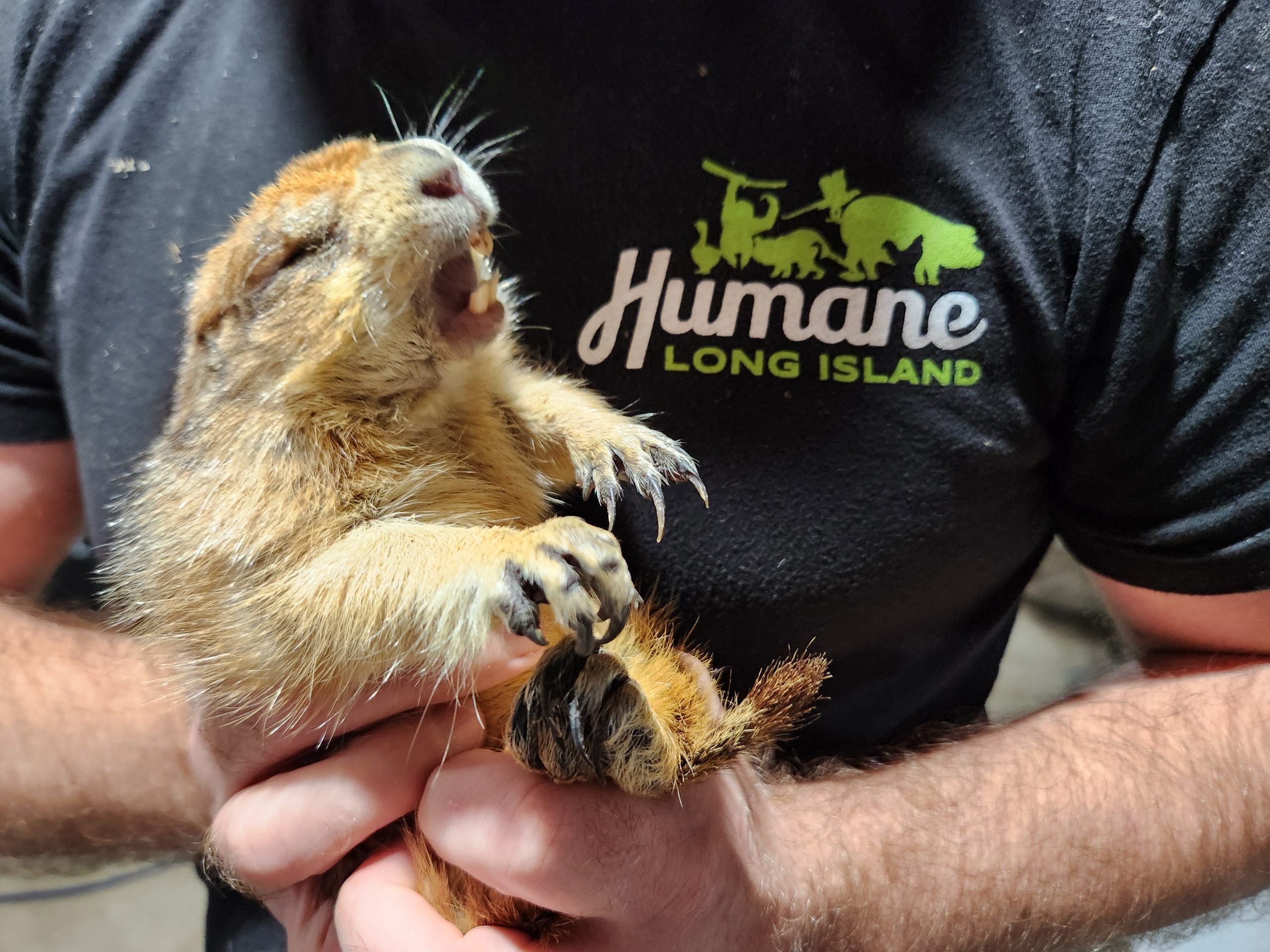
No One Can Make a Wild Animal a Pet—Not Even “Professionals”
A prairie dog suffering from severe respiratory distress and malocclusion was found inside the Woodbury home of veterinarian Linda Pesek, who was arrested after authorities discovered nearly 100 dead and dying animals in her residence.
In another case, 206 animals were seized from the home of Samantha Boyd, a veterinary technician and New York State–licensed wildlife rehabilitator affiliated with LIWRR. Boyd was charged with animal cruelty and endangering an elderly person.
These cases expose a simple truth:
If licensed veterinarians and rehabilitators cannot meet the needs of wild animals, no private citizen can.
The only ethical place for wild animals is in the wild, or in reputable non-breeding sanctuaries.
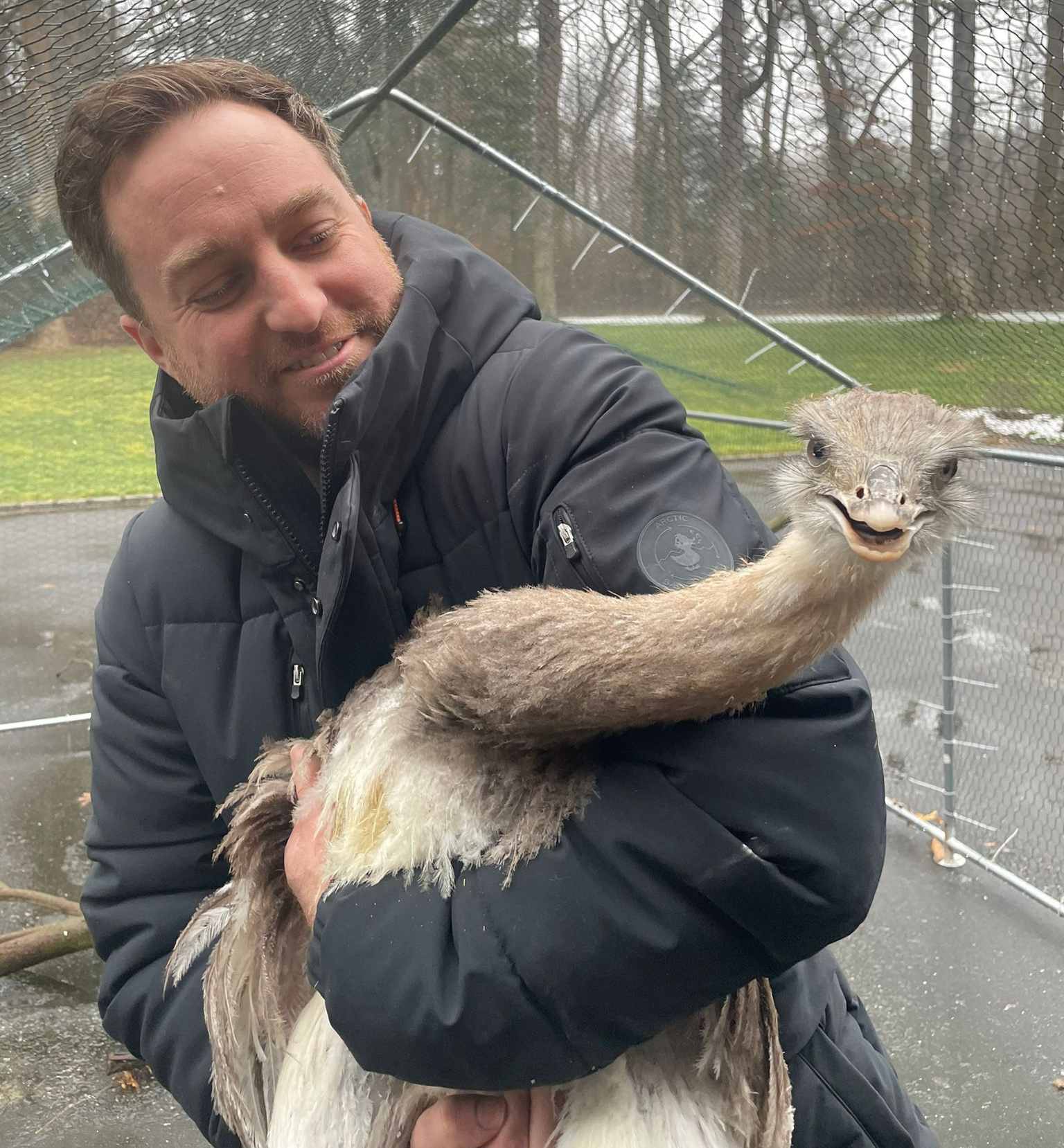
Click to Traffick: The Online Market Driving Wildlife Exploitation
A Humane Long Island complaint prompted a multi-agency raid that uncovered more than 100 animals hoarded in the basement and backyard of a North Bellmore man. The collection included:
-
a South American rhea
-
an endangered tiger salamander
-
prairie dogs
-
venomous Asian water monitors
-
a giant African land snail capable of transmitting fatal meningitis
The individual admitted he bought the rhea egg on eBay while intoxicated and was using the bird for unlicensed public exhibitions.
Wildlife trafficking is the third-largest criminal industry in the world, behind drugs and weapons. Animals caught in this trade endure extreme confinement, fear, and slow suffering—and in this case, trapped in basements beside their natural predators.
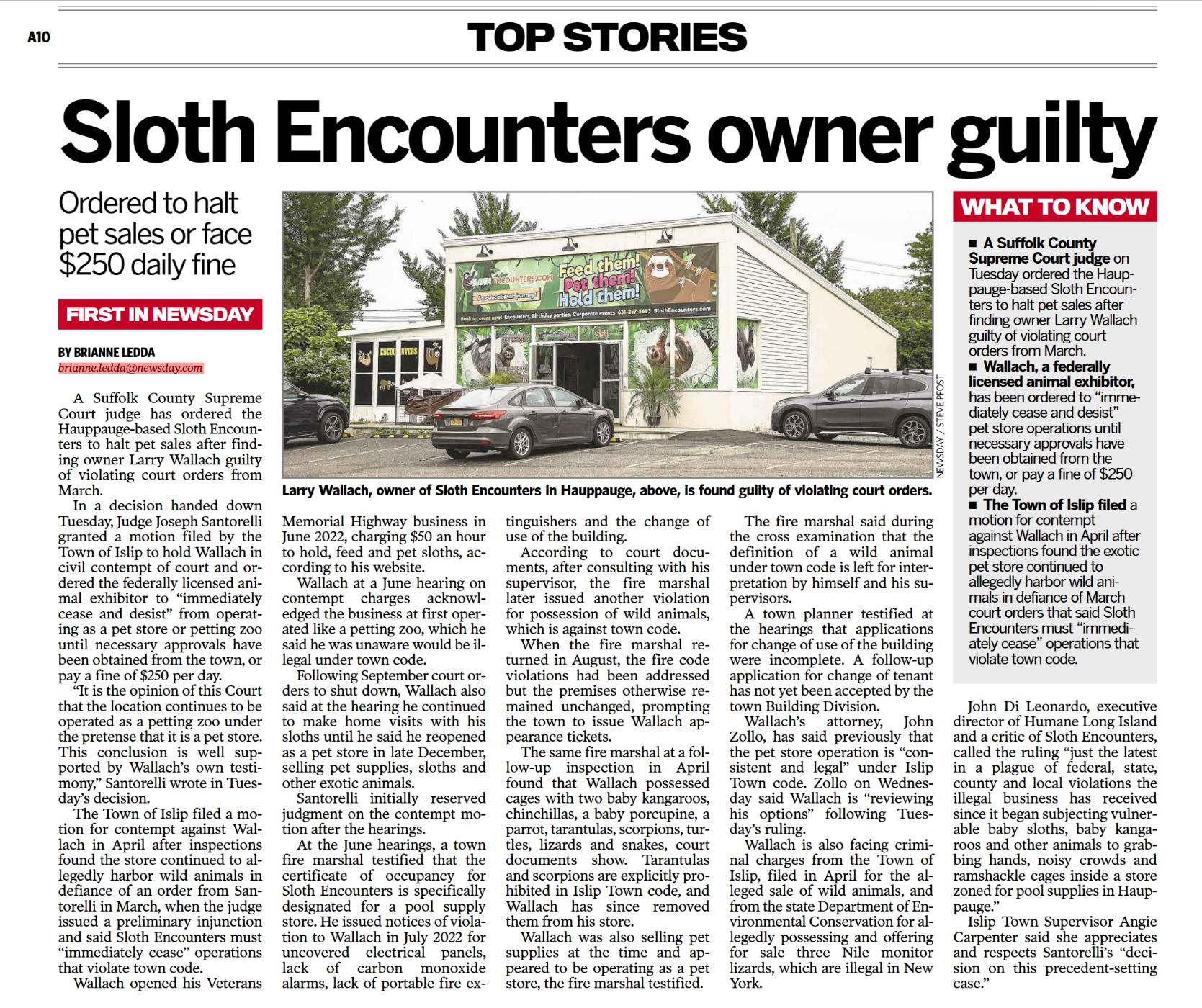
Pet Stores Prioritize Profit Over Animals
Sloth Encounters’ owner Larry Wallach has accrued more than 60 federal violations, including:
-
staff hitting sloths
-
Wallach violently grabbing a wounded sloth by the head and neck
-
lying to federal officials about a child being bitten
Wallach pleaded guilty in 2023 to unlawfully trafficking dangerous Nile monitors and was found in contempt of court. In 2024, his USDA license was revoked, and his New York facility shut down by court order—yet he continues to illegally exhibit animals in Florida.
This is the pattern:
Pet stores and exhibitors profit. Animals suffer.
Buying “Mini Pigs,” Ducklings, or Backyard Chickens Isn’t Cute—it’s Cruel
Many people believe buying “mini pigs,” ducklings, or backyard chickens is quirky or sustainable. In reality, farmed animals purchased from hatcheries or retailers such as Petco or Tractor Supply often endure worse conditions than dogs in the worst puppy mills.
Why? Because most farmed animals—and fish, reptiles, and amphibians—are excluded from the basic federal protections of the Animal Welfare Act and Humane Slaughter Act. This loophole allows hatcheries—factory farms by another name—to commit horrific cruelty and call it “standard practice.”
Male chicks—who cannot lay eggs—are killed within 24 hours, often ground up, suffocated, or gassed by the thousands. Even the so-called “lucky” females aren’t safe: about 20% are misidentified, later abandoned, or killed once they begin to crow, particularly in towns where roosters are banned. Others are dumped at pseudo-sanctuaries that exploit public sympathy—collecting donations while neglecting, hoarding, or quietly slaughtering animals behind closed doors.
Ducklings may look cute, but their care is complex and lifelong. They require heat lamps, species-specific diets, constant access to water, social interaction, and routine foot care. Domestic ducks are as different from wild ducks as house cats are from tigers—they cannot fly, cannot migrate, and are vulnerable to predators or abandonment if released. A healthy flock should include at least three ducks. Those who are ready to responsibly care for them can contact john@humaneli.org; our Duck Defenders program rescues hundreds of ducks every year and always seeks homes for drakes.
Other long-lived species, like turtles, parrots, and reptiles, require decades of commitment and highly specialized care. And there is no such thing as a “mini” pig—even small breeds often grow to hundreds of pounds.
Only legitimate sanctuaries or experienced adopters should take on these animals. Buying them perpetuates an industry built on suffering.
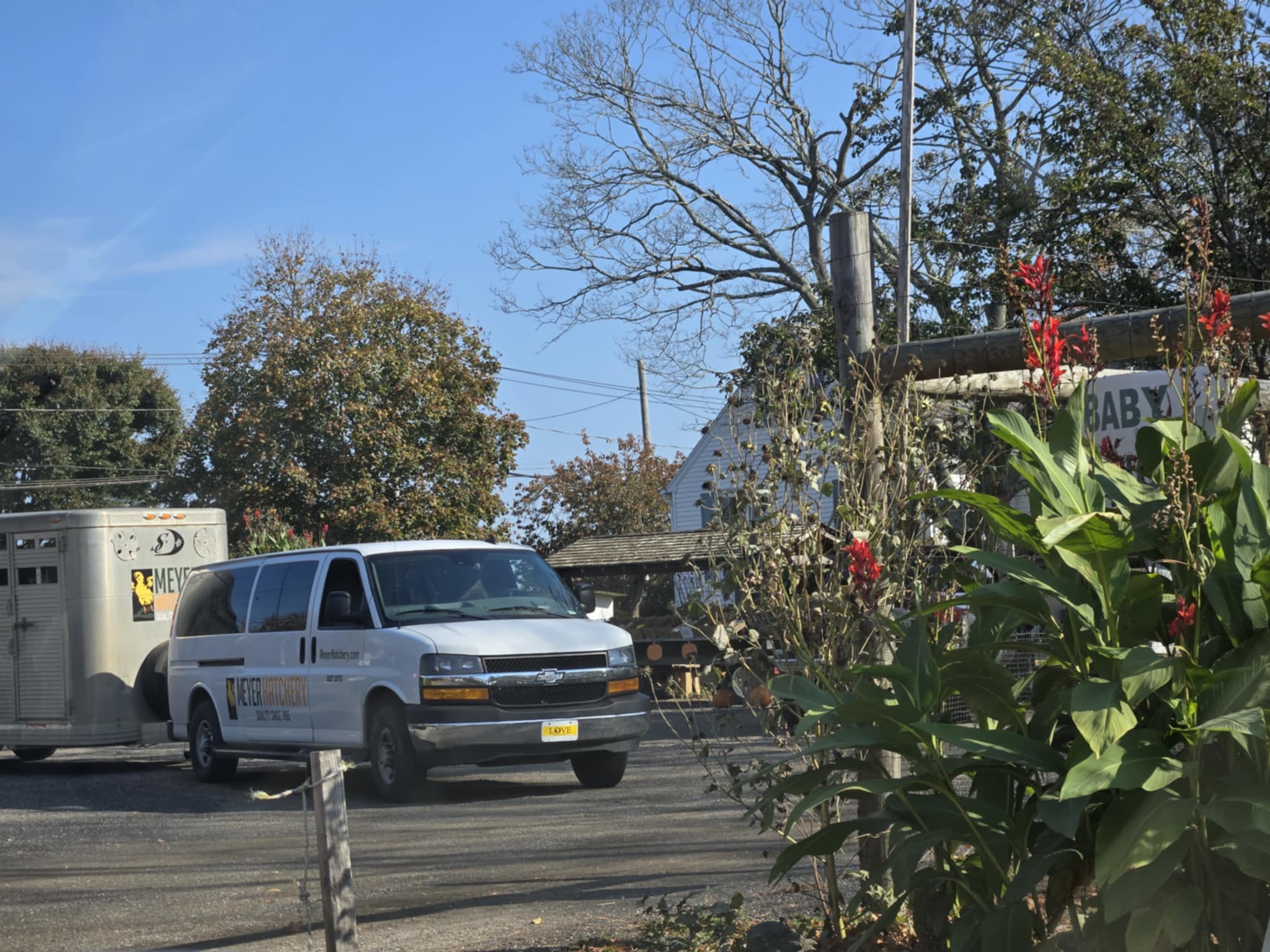
Meyer Hatchery: Factory-Farmed Cruelty at Long Island Poultry
Long Island Poultry claims: “we prefer to buy our birds from smaller companies where the wellness and health of the chickens are better maintained.” Yet, photographs taken outside their business expose the truth—their supplier is Meyer Hatchery, an Ohio-based factory farm hatching over one million chicks annually.
Meyer was cited for suffocating day-old male chicks in plastic bags. The company’s so-called “fix”? Replacing the bags with gas chambers to kill the baby birds more efficiently.
It takes five minutes for the baby birds to die.
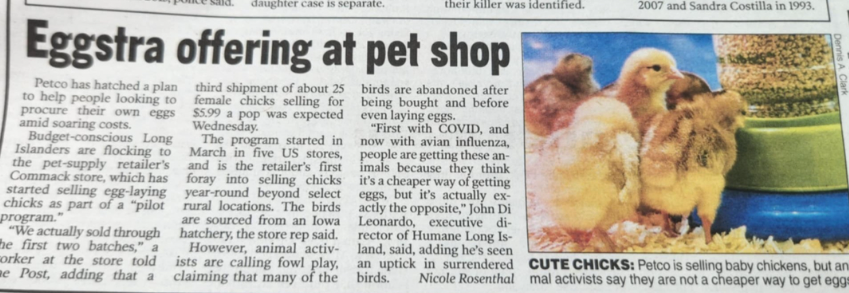
Petco Betrays Animals by Selling Chicks Before Easter
Despite publicly committing to “adoption-only” rabbit policies, Petco began selling baby chicks in multiple suburban stores—including one in Commack—just weeks before Easter. The chicks were sourced from Murray McMurray Hatchery, a massive factory farm that:
-
gasses thousands of male chicks
-
ships newborn chicks via USPS without food or water
Even UPS and FedEx refuse to ship live chicks due to the cruelty involved.
Petco knows better—and does it anyway.
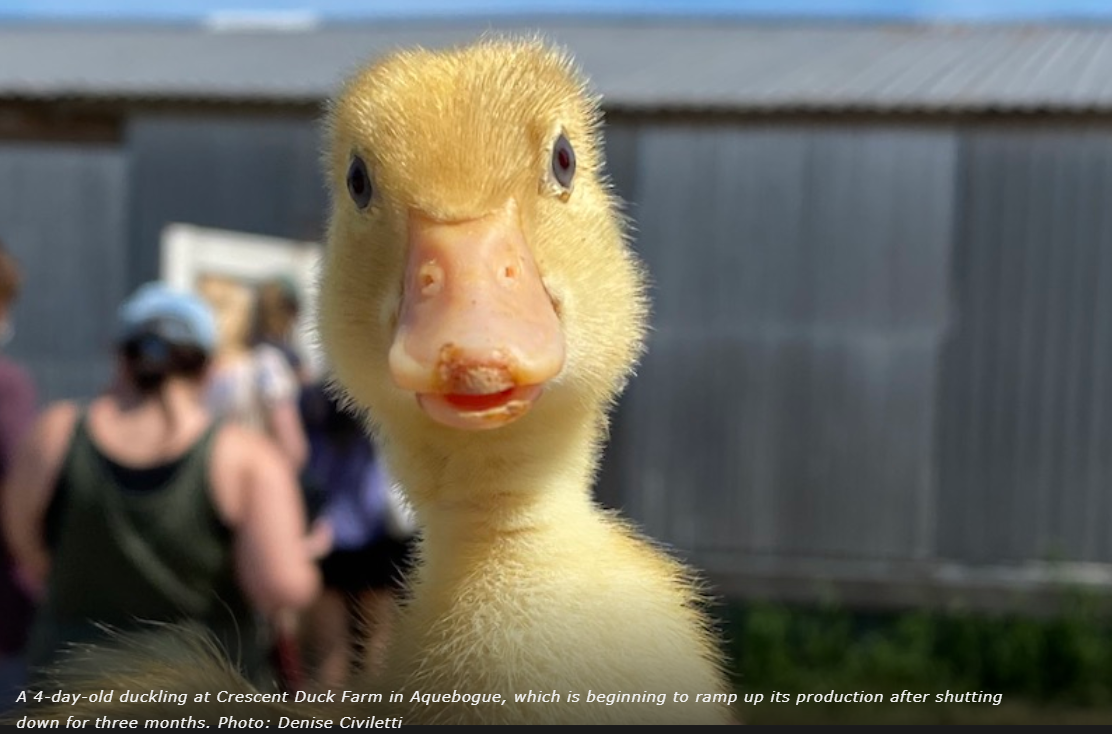
Inside your ‘local’ factory farm: Crescent Duck
At Crescent Duck Farm in Aquebogue—producer of roughly 4% of all duck meat in the United States—over one million ducklings are killed every year.
From their first day of life, these vulnerable birds are packed into overcrowded, unsanitary sheds where they are denied the water, space, and enrichment they need to swim, bathe, preen, and behave naturally. Conditions are so stressful that workers routinely slice off the sensitive tips of their beaks to reduce stress-induced self-mutilation and cannibalism.
Those who survive a few short weeks are slaughtered at just six to eight weeks old, their throats slit while they are still peeping.
Choose Compassion
True compassion begins on your plate, in your home, and in the choices you make.
Adopting instead of buying saves lives—and choosing a vegan lifestyle can save nearly 200 lives every year.
Together, we can break the cycle of breeding for profit and ensure all animals are treated with dignity, compassion, and respect.
What humane long island is doing to help

Rescuing animals like Honey—and promoting responsible adoption
Every animal deserves a safe, loving home—whether they have fur, feathers, or scales. Adopting from shelters or rescue organizations like Humane Long Island gives homeless animals a second chance at life and helps reduce the demand for breeders, pet stores, and online sellers that often prioritize profit over welfare.
investigating puppy mills & poultry stores
Humane Long Island conducts independent investigations and partners with law enforcement in sting operations targeting puppy mills and poultry stores.
In 2025, we partnered with our friends at Humane World for Animals to expose the puppy mill Sportsman’s Kennels and our tip to the Suffolk County District Attorney’s Office resulted in the arrest of backyard breeder and slaughterhouse owner Carlos Lauro. In 2023, the Suffolk County DA’s Office filed misdemeanor charges against Long Island Poultry, Raleigh’s Poultry Farm, Inc., and Agway of Port Jeff — all of which resulted in convictions, holding these suppliers accountable for violating animal welfare laws. And in 2022, our investigation of The Barn Pet Feed & Supplies was featured on Inside Edition.
Shuttering puppy mills and Closing loopholes in State Law pertaining to exotic “Pets”
Humane Long Island was an active member of the coalition that banned the retail sale of dogs, cats, and bunnies in New York State. Now, we’re working with Senator Monica Martinez and Assembly Member Linda Rosenthal to ban the sale of certain exotic animals—including sloths, kangaroos, and prairie dogs—to the public.
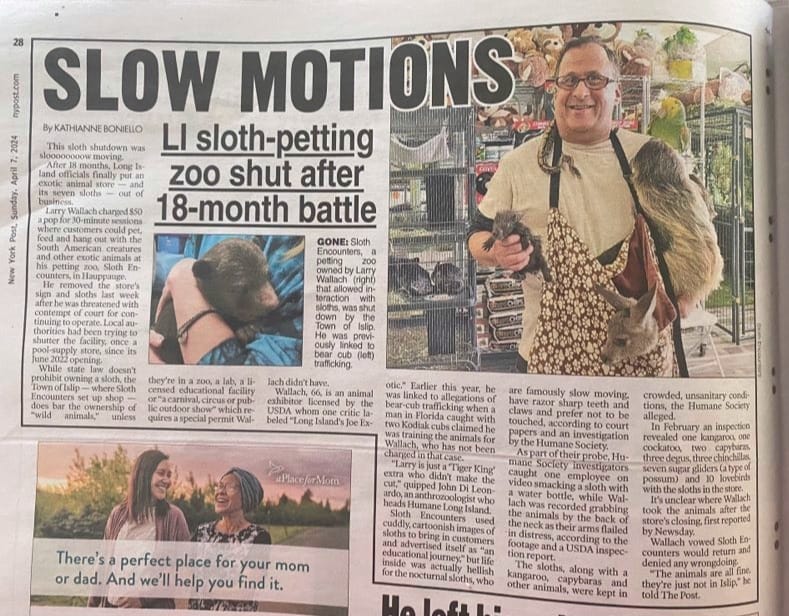
Shutting down unlawfully operated pet stores and pseudosanctuaries
At Humane Long Island, we don’t just promote adoption — we take action against animal exploitation, targeting illegal pet stores and pseudo‑sanctuaries.
We work with authorities to hold dealers accountable. For example, we helped shut down Sloth Encounters, which sold exotic sloths under unsafe conditions, reducing demand for animals bred or imported solely for sale.
Some facilities claim to be sanctuaries but exploit or neglect animals. We’ve intervened at Double D Bar Ranch and the Holtsville Ecology Site, rescuing animals and setting an example that true sanctuaries prioritize animal welfare.